Good Practices

Published by:

Good Practices

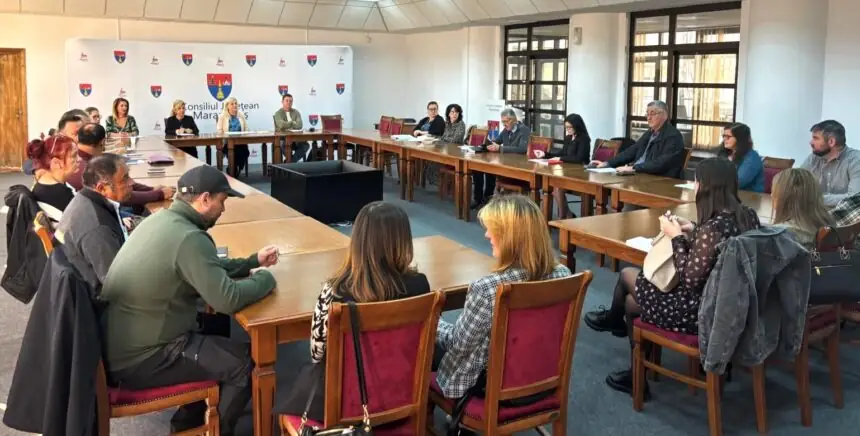
Partners of the LeadEx project, co-financed by the European Regional Development Fund, participated in a study visit to Tallinn, Estonia, which took place from 9 to 11 March.

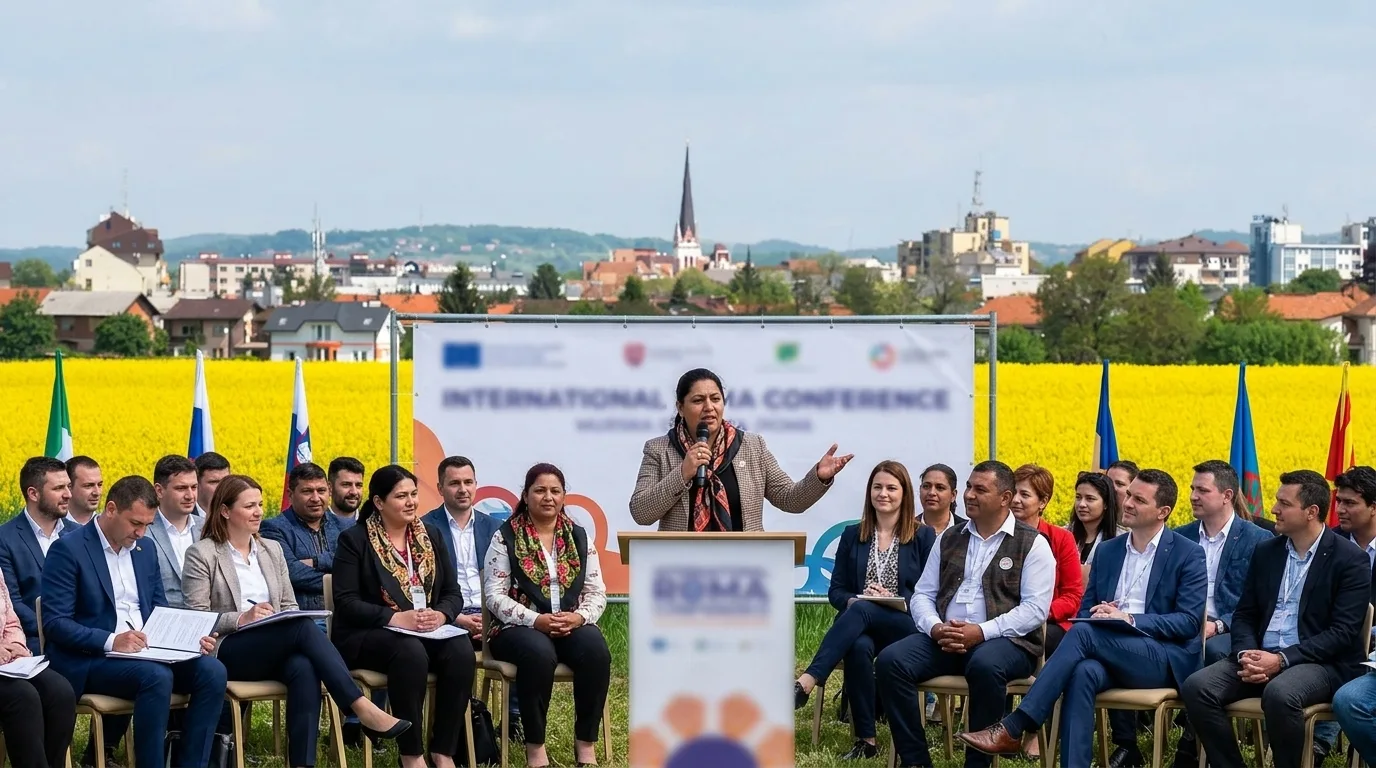
Project participants at a discussion. Slovenian representatives presented the Roma Assistant project as an example of good practice, which is being implemented at the Ministry of Education together with the Centre for School and Extracurricular Activities.

Whether this program is good practice or successful remains to be tested.

Fire

Published by:

Fire

Ondrej Balog shows only ruins of what remained of his home after last week’s fire. Ttwo small children died in the flames. “I built it for my children, for my grandchildren, so that we could all be together, so that we could be happy. If at least there was water, something could be saved,” says the victims’ grandfather Ondrej Balog with difficulty.

Although water is brought to the settlement, the official connection to the houses is complicated by illegal construction and the debts of non-payers. Most locals are therefore dependent on the only drinking water dispenser, which operates on a credit system. When a fire breaks out, residents without access to hydrants are practically helpless.

The Roma rapper Hard Rico

Published by:

The Roma rapper Hard Rico

The Regional Court in Ostrava heard a case involving a group of four men and one woman, allegedly led by 23-year-old Enrico Pešta, known as the Roma rapper Hard Rico. The members of the group face five to seven years in prison for robbery and extortion. Hard Rico pleaded guilty in the courtroom, the prosecutor is asking for six years in prison for him. The verdict will be handed down in April.

Bad.

Roma in Bosnia

Published by:

Roma in Bosnia

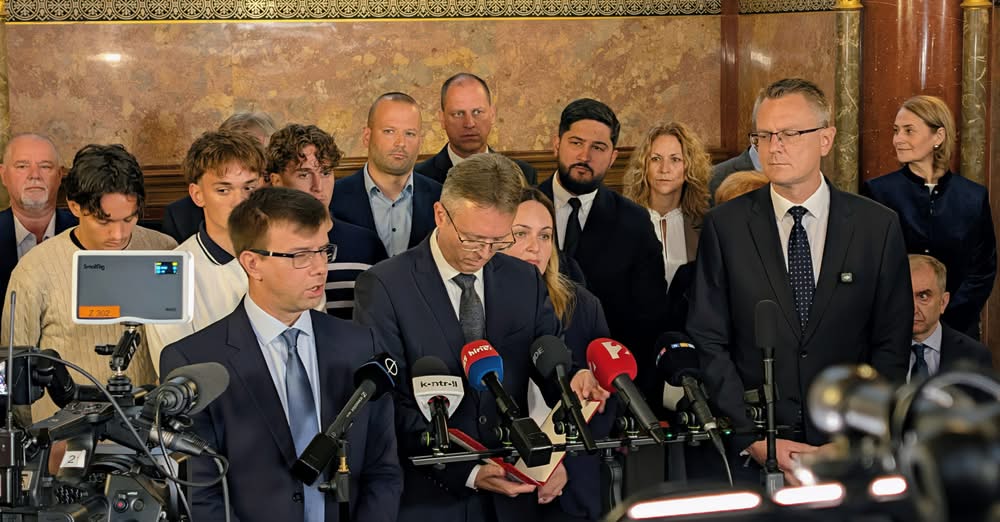
Three decades after the war in Bosnia and Herzegovina, Roma still remain outside the institutional memory, justice and reparations system, although, according to new findings, they were exposed to all forms of war crimes, from murders to expulsions and displacement, it was emphasized at the conference on the suffering of Roma in the period 1992-1995.

The conference was held in the building of the Parliamentary Assembly of Bosnia and Herzegovina under the title “Through Truth to Justice: Thirty Years of Silence on the Suffering of Roma in the Period 1992-1995”, within the project “Improving Roma Participation in Transitional Justice in BiH”, funded by the Government of the United Kingdom.

Germany: Judgement

Published by:

Germany: Judgement

A blogger with around 52,000 followers posted on Twitter (now X) accusing a “large portion of the Sinti and Roma” of excluding themselves “from civilized society.” She listed accusations including welfare fraud, truancy, theft, littering, and “rental nomadism.”

The Higher Regional Court of Jena clarified that not every discriminatory statement violates human dignity. Describing Sinti and Roma as “rotating Europeans with a property-ownership disability” is grossly tasteless and defamatory—but not incitement to hatred.

French Chronicle …

Published by:

French Chronicle …

Quite a few articles about two Romanian Roma families who were condemned for having forced their children to beg. Other than that, in Nantes, Roma are voting to try to influence their fate in that city. Finally, in central France, two Serbian and two Romanian Roma were condemned for a series of burglaries.

Firefighters and Roma

Published by:

Firefighters and Roma

Apparently, four responding firefighters and equipment were attacked by residents of the Lipany settlement in Slovakia, who started throwing stones at the officers.

Circumstances and reasons are not mentioned.

Education in Slovakia

Published by:

Education in Slovakia

According to educator and education expert Juraj Hipš, Slovak education system has long struggled with segregation, which has not only a racial but also a social dimension. He pointed out that it is not just schools where Roma children are concentrated, but also schools where children from socially disadvantaged families, from hostels or from generational poverty are concentrated. “We have a huge problem with segregation in Slovakia.” He recalled that according to data from the Ministry of Education, there are almost 500 schools in Slovakia that are segregated or at risk of segregation.

Lithuania and the Z and N Words

Published by:

Lithuania and the Z and N Words

Minister of Culture Vaida Aleknavičienė says she disagrees with the statements of Audrius Valotka, head of the State Language Inspectorate, about “gypsies” and “negroes”, and invites him for a conversation.

School Project

Published by:

School Project

Poverty and early marriages are among the main reasons why children from vulnerable groups (read minorities here, and of course especially Roma)do not attend school regularly, experts said at the opening of the project to retain students in the education system, held at the capital’s 51st Secondary School “Elisaveta Bagryana” under the slogan “Let’s bring their future back”.

Ruja Ignatova

Published by:

Ruja Ignatova

A TV series is being currently made in Bulgaria about Ruja Ignatova, the so-called crypto queen who managed to swindle 4 bio USD and vanished.

The article says that according to some sources, she was born on May 30, 1980, in Ruse. According to other sources, her family, which is of Roma origin, is from the villages of Pleven.

Social Inclusion Agency

Published by:

Social Inclusion Agency

The Czech Social Inclusion Agency, an agency whose goal was the inclusion of Roma, is being restructured. Unions in the Agency are calling of a strike, and several Roma organisations have expressed concerns.

In a statement to the news server Romea.cz, the Government Commissioner for Roma Minority Affairs Lucie Fuková stated that the Agency for Social Inclusion has moved away from its original mission over the years, which was to support the integration of Roma and address the situation in socially excluded localities. She criticizes the lack of measurable results, transparent data and real participation of Roma and also refers to the conclusions of the Supreme Audit Office from 2024. According to her, it is therefore appropriate to consider a fundamental transformation and readjustment of the social inclusion agenda.

Latvia Triplets

Published by:

Latvia Triplets

Welfare Minister Reinis Uzulnieks congratulated the family that welcomed the first set of triplets this year and thanked the maternity hospital staff. The state will soon provide the family with a one-time benefit of 15,000 euros, the minister announced on social media.

The minister also responded to negative comments on social media, noting: “Today I congratulated the parents of the triplets. I have already received negative comments about Indians, etc. I’d like to emphasize that this is a Roma family who returned to Latvia after 15 years in England, and the husband found work in forestry in Valmiera. They emphasize that nowhere is as good and beautiful as home! May they succeed!

Moldova and Roma

Published by:

Moldova and Roma

President of the Republic of Moldova Maia Sandu today participated in the conference “Roma and the Future of Work: A Social Rights Perspective” with Council of Europe Secretary General Alain Berset, where she discussed the challenges and achievements in integrating the Roma community.

The head of state noted that discrimination against Roma remains a widespread problem in many European countries, including the Republic of Moldova, as confirmed by the Council of Europe Secretary General’s 2025 report. In this context, the President emphasized the need for concrete and more targeted actions to integrate Roma into the labor market, as well as measures dedicated to youth and supporting entrepreneurship. The head of state also noted that the green and digital transitions must be inclusive, and all citizens, regardless of their origin, must be able to enjoy the full benefits of European integration.

Slovenia, the Šutar Act, and Elections

Published by:

Slovenia, the Šutar Act, and Elections

The Roma issue in southeastern Slovenia remains one of the most pressing issues in the region, which has been causing social tensions, security incidents and differences in the development of individual areas for many years. That is why, before Sunday’s parliamentary elections, Social Democrats candidates from Dolenjska were asked about this issue and presented their views on the recently adopted Šutar’s law. Their answers show that they see the law as a necessary step, but they also warn of its limitations and risks.

Bad.

Czech TV Show

Published by:

Czech TV Show

Roma are often talked about in the Czech Republic, but much less are they actually listened to. The guest of the 21st episode of the SODAcast podcast is Iveta Millerová, who describes why, in her opinion, the public debate does not see the whole, what the limits of institutions are, and why no fundamental change will occur without the will of the families and communities themselves.

rroma.org
en_GBEN