Category Archives: Germany

Exhibition

Published by:

Exhibition

The exhibition “The Thread That Holds” by Romnja artist Luna De Rosa opens on July 22, 2026, at Halle 116, focusing on exclusion, discrimination, and anti-Roma stereotypes.

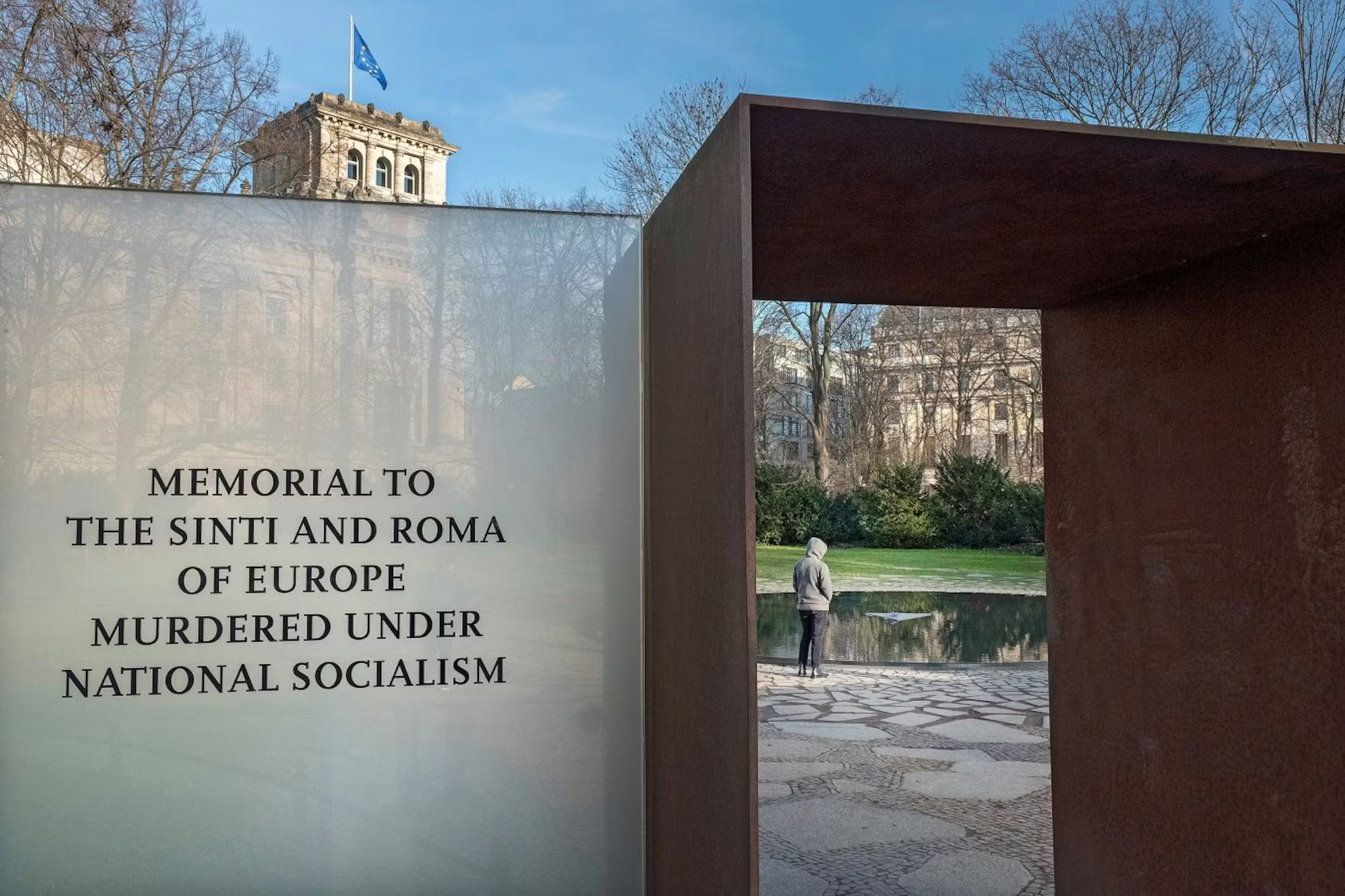
This is the first art exhibition in the newly created space, commemorating the Porajmos, the genocide of Sinti and Roma during the Nazi regime, which remains underrecognized.

The event includes a moderated discussion with the artist and musical accompaniment, and the exhibition runs from July 22 to October 4, 2026, with free admission during regular hours.

AfD and Roma

Published by:

AfD and Roma

AfD politicians Norbert Emmerich and Enxhi Seli-Zacharias were filmed giving brooms to Sinti and Roma in Gelsenkirchen, instructing them to sweep the sidewalk. The video, which was shared on social media, has since been removed, and some Sinti and Roma reported feeling intimidated by the politicians.

Other political parties, including SPD, FDP, and Greens, condemned the video as inhumane.

What are you wondering about?

Germany and Post-War Discrimination

Published by:

Germany and Post-War Discrimination

Historian Stefanie Schüler-Springorum discusses the ongoing discrimination and persecution in post-Nazi Germany, highlighting that groups such as Jews, Sinti, Roma, and homosexuals continued to face significant challenges and societal exclusion.

She emphasizes that while the end of the Nazi regime in 1945 marked a liberation for some, it did not equate to freedom for all, as many groups remained marginalized and subjected to ongoing discrimination.

Schüler-Springorum points out that remnants of these prejudices persist in contemporary German society, with issues of antisemitism, racism, and homophobia still prevalent, reflecting a deep-rooted notion of who is considered a “true German.”

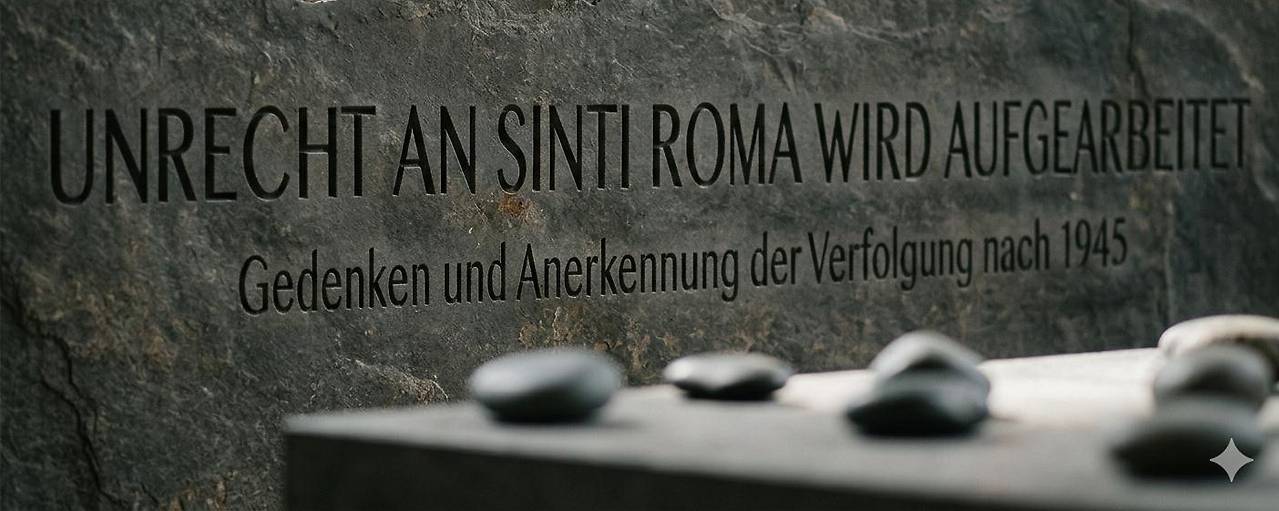
In paralle, the German government has established an independent commission to address the injustices faced by Sinti and Roma in Germany and East Germany after 1945, implementing a key recommendation from the Independent Commission on Antiziganism.

The commission aims to comprehensively document the injustices, include unheard perspectives, and integrate the experiences of affected individuals and their descendants into German memory culture.

This initiative is part of a broader European movement towards state-led processes of historical reckoning, acknowledging Germany’s unique historical responsibility regarding the genocide of Sinti and Roma.

Remember

Published by:

Remember

The Karlsruhe city council has named a square near Kapellenstraße as Familie-Reinhardt-Platz to honor the Sinti and Roma victims of the Nazis. There was consensus on the need for a memorial, but disagreement on the location, with some council members finding the chosen site inadequate.

The proposal was supported by multiple political parties, while the CDU suggested an alternative name and location for the memorial.

Djelem Djelem Festival

Published by:

Djelem Djelem Festival

The 13th Djelem Djelem Arts and Culture Festival in Dortmund features the Roma Ball concert, celebrating the 10th anniversary of the Romano Than association, which advocates for the visibility and empowerment of Roma communities in the Ruhr area.

The concert aims to celebrate milestones, challenges overcome, and the solidarity networks built over the past decade, promoting an inclusive and open space for cultural exchange.

The band “Amen Roma” will perform, blending traditional Roma music with modern influences, symbolizing self-determination and community identity.

Reaction against AfD

Published by:

Reaction against AfD

The German AfD party publicly humiliated Roma individuals in Gelsenkirchen by forcing them to clean the streets, which sparked a response from the art exhibition “Radikale Hoffnung” that addresses resistance against racism.

The exhibition features works by Roma artists, including Małgorzata Mirga-Tas, who highlights the struggles of Roma women against discrimination, and Selma Selman, who critiques societal exclusion through performance art. The exhibition emphasizes the importance of collective action and social justice, linking historical labor struggles to contemporary issues of marginalization and identity loss.

Romanian Roma in Germany

Published by:

Romanian Roma in Germany

The article discusses the integration challenges faced by Romanian Roma in Germany, emphasizing the need for tailored public policies that address their specific vulnerabilities and circumstances. It highlights the differences between the historical Sinti community and recent Roma migrants from Eastern Europe, stressing the importance of recognizing these distinctions in policy-making. The author calls for collaborative efforts between Germany and Romania to enhance educational and mentoring programs, aiming for genuine inclusion and dignity for the Roma community.

Germany: Increased Discrimination

Published by:

Germany: Increased Discrimination

Significantly more cases of discrimination, denigration, insults, and violence against Sinti and Roma have been registered with the Reporting and Information Center for Antigypsyism (MIA) in Rhineland-Palatinate. The number rose by 41 to 100 incidents last year. However, there is a high number of unreported cases, said MIA board member Christian Kling in Mainz.

Bulgarian Roma in Germany

Published by:

Bulgarian Roma in Germany

According to this Bulgarian article, there are neighbourhoods in two small German towns entirely composed of Roma from Vidin, Bulgaria. Apparntly, neighbours are not so fond, and still according to the article, “quite a few of them, together with the Romanian Roma, are involved in some criminal scheme and often have problems with the local authorities”.

No comments, apart that some actual journalistic work would be nice …

Romani Pov

Published by:

Romani Pov

The Romani youth group PowerPeng! from Berlin meets the Romani media platform TUKE.TV from Brno. Through short films and a performance, they engage in dialogue and discuss how young Roma in Germany and the Czech Republic keep the memory of Sinti and Roma alive through their media work, how they shape resistance against the far right, and how they can maintain their place in the public consciousness.

Criminal Charges

Published by:

Criminal Charges

The Central Council of German Sinti and Roma intends to file criminal charges against the municipality of Teistungen in the Eichsfeld district. This was confirmed to this newsroom by the Council’s chairman, Romani Rose. The reason given was “deeply abhorrent and inhumane” statements in the municipality’s app.

Following an uproar surrounding a caravan camp in Ferna (Eichsfeld district), the municipality local app referred to “Gypsies” who were to be “gotten rid of.”

Hamburg: Commemoration

Published by:

Hamburg: Commemoration

On May 16, 1940, police officers arrested approximately 1,000 Sinti and Roma in Hamburg and Northern Germany. At the memorial site at Hanoverian Station in Lohsepark in HafenCity, Roma and Sinti will commemorate the fact that their ancestors were deported to concentration camps by the National Socialists 86 years ago on Saturday. A wreath will be laid around 2 p.m. With this annual day of remembrance, they also want to remember the survivors who still have to live with the consequences of this injustice.

Khamoro Festival: Ma bistrass! – Against Forgetting!

Published by:

Khamoro Festival: Ma bistrass! – Against Forgetting!

What contribution can art and culture make to remembering the genocide of the Roma and Sinti? This question will be addressed in the discussion in the context of the exhibition of the same name.

This collaborative event between the Foundation Remembrance, Responsibility and Future (EVZ) and the Goethe-Institut brings together German and Czech stakeholders from civil society and the cultural sector, inviting them to reflect, discuss, and develop new perspectives for an inclusive and future-oriented culture of remembrance. The discussion takes place in conjunction with the photography exhibition of the same name, which will be on display on Kampa Island in Prague from May 27 to June 10.

Zentralrat on Austria

Published by:

Zentralrat on Austria

The Chairman of the German Central Council of Sinti and Roma, Romani Rose, pointed out that the National Socialists called on the population in 1933 not to buy from Jews and had police and SS troops march in front of Jewish businesses. He was criticising a letter by the Austrian police of the Burgenland warning the population about Sinti and Roma.

Rose appealed to Interior Minister Karner of the Austrian People’s Party (ÖVP) to initiate disciplinary proceedings against those responsible within the police force. He emphasized that the Council of Europe’s Framework Convention for the Protection of National Minorities entered into force in Austria in 1998. This obligates the state to counteract all forms of anti-Gypsyism. The Central Council stated that the Europe-wide rise of nationalist forces, which often base their political program on racism and incitement and have now become the strongest political force in Austria, is alarming.

Award

Published by:

Award

The GoShorts program selected six short films that open up space for questions of power and empowerment – of collectives and individuals. Among them was Kismet by Novo Mesto director Žiga Virc, who received the RheinMain Award. It is the sotory of a 11 years old Romni.

Discrimination in Germany

Published by:

Discrimination in Germany

Marcella Herzenberger is the chairwoman of the regional association of German Sinti and Roma in Swabia. In this role, she has been working for years to raise awareness about a very specific form of racism directed against Sinti and Roma. This racism manifests itself in deeply rooted prejudices, discrimination and exclusion, extending to structural disadvantages in education, employment, housing, and everyday life.

Racism in Berlin

Published by:

Racism in Berlin

Sinti and Roma are increasingly subjected to discrimination. In 2025, the documentation center on anti-Gypsyism run by the Amaro Foro association recorded the highest number of incidents since documentation began: a total of 293 cases – an increase of approximately 19 percent compared to the previous year. According to the association, the actual number of cases is likely even higher.

Django Reinhardt Movie

Published by:

Django Reinhardt Movie

A movie from 2017 about Django Reinhardt. While other Sinti across Europe are persecuted, Django’s popularity allows him to feel safe – until the Nazis try to send him on tour to Germany. Django refuses. His Parisian lover helps him, his pregnant wife, and his mother go into hiding near the Swiss border. There he meets members of his extended family, who are also on the run. He plans to cross Lake Geneva into Switzerland, but the Nazis are hot on his heels.

Well, the Swiss denied him Entry …

rroma.org
en_GBEN