Category Archives: Germany

ERIAC and Racism

Published by:

ERIAC and Racism

In view of tomorrow’s elections in Saxony-Anhalt, were the AfD has a fair chance of ruling the region, ERIAC has a strong message on fascism and racism…

45 Years Ago

Published by:

45 Years Ago

On September 1, 1981, a group of Sinti gathered at the University of Tübingen to reclaim documents related to the Nazi persecution of their community, including photographs and records from the ‘Racial Hygiene Research Center’.

The term “Zigeuner” (Gypsy) is historically loaded and considered derogatory; the article uses “Z*” to avoid perpetuating this stigma while discussing the historical context of the genocide known as Porajmos.

The involvement of scientists in legitimizing the persecution of Sinti and Roma is highlighted, with calls for recognition and justice continuing to this day, as the community seeks to reclaim their narrative and history.

Germany and AfD

Published by:

Germany and AfD

What do you expect from AfD: Simply, racist statements.

The Central Council of German Sinti and Roma has filed a criminal complaint against Tino Chrupalla, the leader of the AfD party, accusing him of incitement and insult during a campaign event in Grimmen, Mecklenburg-Vorpommern.

Chrupalla allegedly suggested that weapons found in a forest near Berlin were likely lost by ‘Gypsies’ while mushroom picking, which was met with applause and laughter from the audience.

The council expressed shock that, 81 years after Auschwitz, a far-right party is using cynical rhetoric against Sinti and Roma, which they claim promotes fear and hatred towards minorities.

Chrupalla defended his comments, stating he did not intend to offend the Sinti and Roma communities, despite receiving applause for his remarks linking them to a recent weapons find in Berlin.

Romani Rose

Published by:

Romani Rose

Romani Rose, a prominent civil rights activist for the Sinti and Roma minority in Germany, has dedicated over 50 years to combating anti-Roma sentiment and advocating for recognition of their history and rights.

Key milestones in his activism include the acknowledgment of the Holocaust by Chancellor Helmut Schmidt in 1982 and the recognition of Sinti and Roma as a national minority in Germany through a European agreement ratified in 1998.

Rose emphasizes the importance of viewing the Sinti and Roma as integral to German society, advocating for a future-oriented perspective while remaining aware of ongoing challenges and anti-Roma violence.

Invisible Minorities

Published by:

Invisible Minorities

The article discusses the concept of concealed identity, particularly among Roma and Jewish communities, highlighting the historical reasons for hiding one’s ethnic background due to discrimination and violence.

It explores the complexities of transgenerational concealed identity, where descendants inherit the burden of hidden heritage, often feeling alienated from both majority and minority groups.

The author reflects on personal experiences and the emotional resonance of identity, emphasizing the struggle between societal labels and personal resonance in defining one’s self.

Young Roma in Germany

Published by:

Young Roma in Germany

The documentary addresses the challenges faced by Sinti and Roma communities, highlighting deep-rooted prejudices and anti-Roma sentiment in society.

It features a film that follows four young Roma individuals who are challenging stereotypes and advocating for self-empowerment while navigating their cultural identity and societal challenges.

The young Roma generation is increasingly resisting discrimination in education, housing, and employment, striving for equal opportunities and societal recognition.

Cologne and Deportation

Published by:

Cologne and Deportation

An article which severely condemns the Cologne city administration for preventing the deportation of Roma who have committed crimes and are required to leave the country. The article’s author says tht this must not go unpunished.

Memory

Published by:

Memory

Frieda Daniels, a 93-year-old former high-wire artist, shares her experiences during the genocide at the time of the Holocaust to educate younger generations about the atrocities faced by the Sinti and Roma community.

She and her family were persecuted by the Nazis, with an estimated 500,000 Sinti and Roma murdered during the genocide.

Now living in California, Frieda continues to travel and speak about her past, recently reflecting on her experiences during a visit to an exhibition in Heidelberg, Germany.

Berlin Exhibition

Published by:

Berlin Exhibition

The exhibition “You Are All Our Children in One” opens at the European Roma Institute for Arts and Culture in Berlin, exploring the ongoing impact of racial classification and forced sterilization on Roma and Sinti communities post-World War II.

Slovak artist Emília Rigová, who works under the pseudonym Bári Raklóri [Big (non-Romani) Girl], presents her work addressing the suppression of Roma identity through installations and performance art, including a piece on the forced sterilization of Roma women in Czechoslovakia.

Rigová shares her personal connection to the issue, revealing that her mother was sterilized without consent, which deeply affected her childhood and emotional world, highlighting the broader historical trauma faced by women in similar situations.

Exhibition

Published by:

Exhibition

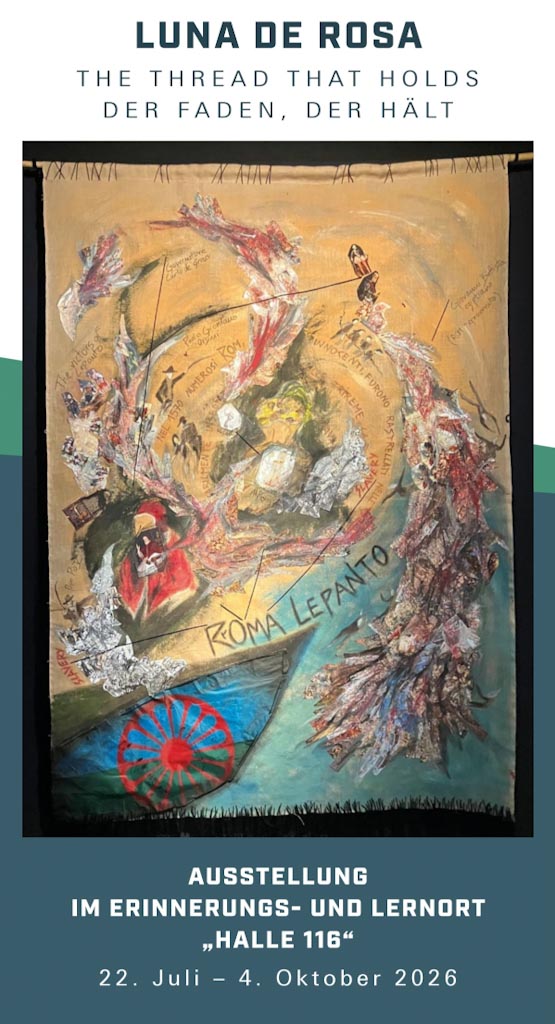
The exhibition “The Thread That Holds” by Romnja artist Luna De Rosa opens on July 22, 2026, at Halle 116, focusing on exclusion, discrimination, and anti-Roma stereotypes.

This is the first art exhibition in the newly created space, commemorating the Porajmos, the genocide of Sinti and Roma during the Nazi regime, which remains underrecognized.

The event includes a moderated discussion with the artist and musical accompaniment, and the exhibition runs from July 22 to October 4, 2026, with free admission during regular hours.

AfD and Roma

Published by:

AfD and Roma

AfD politicians Norbert Emmerich and Enxhi Seli-Zacharias were filmed giving brooms to Sinti and Roma in Gelsenkirchen, instructing them to sweep the sidewalk. The video, which was shared on social media, has since been removed, and some Sinti and Roma reported feeling intimidated by the politicians.

Other political parties, including SPD, FDP, and Greens, condemned the video as inhumane.

What are you wondering about?

Germany and Post-War Discrimination

Published by:

Germany and Post-War Discrimination

Historian Stefanie Schüler-Springorum discusses the ongoing discrimination and persecution in post-Nazi Germany, highlighting that groups such as Jews, Sinti, Roma, and homosexuals continued to face significant challenges and societal exclusion.

She emphasizes that while the end of the Nazi regime in 1945 marked a liberation for some, it did not equate to freedom for all, as many groups remained marginalized and subjected to ongoing discrimination.

Schüler-Springorum points out that remnants of these prejudices persist in contemporary German society, with issues of antisemitism, racism, and homophobia still prevalent, reflecting a deep-rooted notion of who is considered a “true German.”

In paralle, the German government has established an independent commission to address the injustices faced by Sinti and Roma in Germany and East Germany after 1945, implementing a key recommendation from the Independent Commission on Antiziganism.

The commission aims to comprehensively document the injustices, include unheard perspectives, and integrate the experiences of affected individuals and their descendants into German memory culture.

This initiative is part of a broader European movement towards state-led processes of historical reckoning, acknowledging Germany’s unique historical responsibility regarding the genocide of Sinti and Roma.

Remember

Published by:

Remember

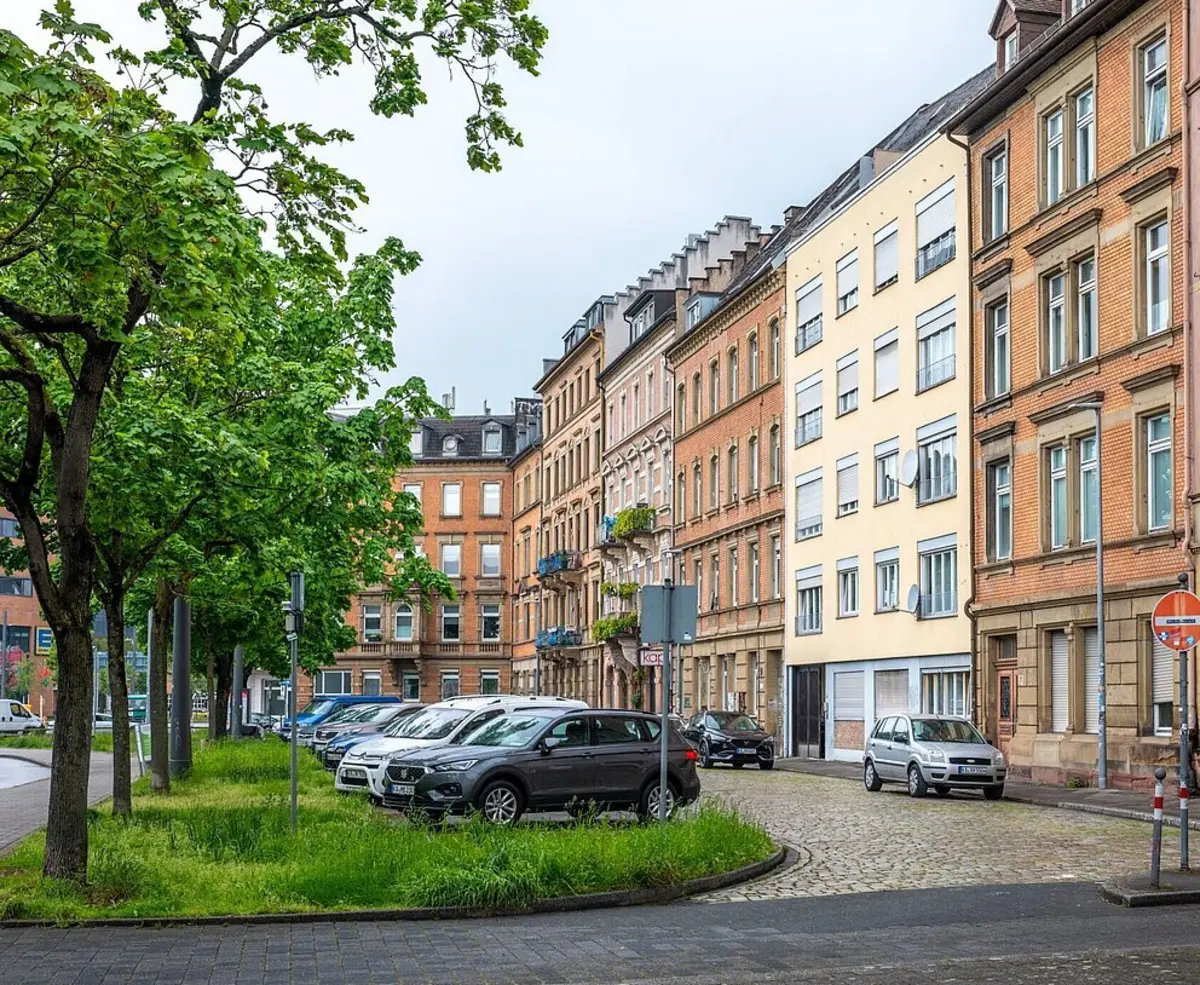
The Karlsruhe city council has named a square near Kapellenstraße as Familie-Reinhardt-Platz to honor the Sinti and Roma victims of the Nazis. There was consensus on the need for a memorial, but disagreement on the location, with some council members finding the chosen site inadequate.

The proposal was supported by multiple political parties, while the CDU suggested an alternative name and location for the memorial.

Djelem Djelem Festival

Published by:

Djelem Djelem Festival

The 13th Djelem Djelem Arts and Culture Festival in Dortmund features the Roma Ball concert, celebrating the 10th anniversary of the Romano Than association, which advocates for the visibility and empowerment of Roma communities in the Ruhr area.

The concert aims to celebrate milestones, challenges overcome, and the solidarity networks built over the past decade, promoting an inclusive and open space for cultural exchange.

The band “Amen Roma” will perform, blending traditional Roma music with modern influences, symbolizing self-determination and community identity.

Reaction against AfD

Published by:

Reaction against AfD

The German AfD party publicly humiliated Roma individuals in Gelsenkirchen by forcing them to clean the streets, which sparked a response from the art exhibition “Radikale Hoffnung” that addresses resistance against racism.

The exhibition features works by Roma artists, including Małgorzata Mirga-Tas, who highlights the struggles of Roma women against discrimination, and Selma Selman, who critiques societal exclusion through performance art. The exhibition emphasizes the importance of collective action and social justice, linking historical labor struggles to contemporary issues of marginalization and identity loss.

Romanian Roma in Germany

Published by:

Romanian Roma in Germany

The article discusses the integration challenges faced by Romanian Roma in Germany, emphasizing the need for tailored public policies that address their specific vulnerabilities and circumstances. It highlights the differences between the historical Sinti community and recent Roma migrants from Eastern Europe, stressing the importance of recognizing these distinctions in policy-making. The author calls for collaborative efforts between Germany and Romania to enhance educational and mentoring programs, aiming for genuine inclusion and dignity for the Roma community.

Germany: Increased Discrimination

Published by:

Germany: Increased Discrimination

Significantly more cases of discrimination, denigration, insults, and violence against Sinti and Roma have been registered with the Reporting and Information Center for Antigypsyism (MIA) in Rhineland-Palatinate. The number rose by 41 to 100 incidents last year. However, there is a high number of unreported cases, said MIA board member Christian Kling in Mainz.

Bulgarian Roma in Germany

Published by:

Bulgarian Roma in Germany

According to this Bulgarian article, there are neighbourhoods in two small German towns entirely composed of Roma from Vidin, Bulgaria. Apparntly, neighbours are not so fond, and still according to the article, “quite a few of them, together with the Romanian Roma, are involved in some criminal scheme and often have problems with the local authorities”.

No comments, apart that some actual journalistic work would be nice …

Romani Pov

Published by:

Romani Pov

The Romani youth group PowerPeng! from Berlin meets the Romani media platform TUKE.TV from Brno. Through short films and a performance, they engage in dialogue and discuss how young Roma in Germany and the Czech Republic keep the memory of Sinti and Roma alive through their media work, how they shape resistance against the far right, and how they can maintain their place in the public consciousness.

Criminal Charges

Published by:

Criminal Charges

The Central Council of German Sinti and Roma intends to file criminal charges against the municipality of Teistungen in the Eichsfeld district. This was confirmed to this newsroom by the Council’s chairman, Romani Rose. The reason given was “deeply abhorrent and inhumane” statements in the municipality’s app.

Following an uproar surrounding a caravan camp in Ferna (Eichsfeld district), the municipality local app referred to “Gypsies” who were to be “gotten rid of.”

rroma.org
en_GBEN