Category Archives: Montenegro

Child Marriages

Published by:

Child Marriages

Child marriages, particularly in Roma communities in Montenegro, continue despite legal prohibitions, with many girls entering into arranged marriages as young as 12 or 14 years old.

Victims like Jasmina recount experiences of abuse and lack of agency, with decisions about their marriages made by male family members without their consent.

Organizations are working to combat child marriages, but many cases remain unreported due to societal pressures and the normalization of these practices within the communities.

Montenegro and Roma

Published by:

Montenegro and Roma

The Roma and Egyptian communities in Montenegro face structural discrimination, low living standards, and limited access to education, employment, and social security, necessitating long-term interventions for true equality and integration.

A significant portion of individuals at risk of statelessness are children, with many lacking birth registration, which is essential for legal identity.

Despite existing laws and programs aimed at inclusion, high levels of discrimination persist, particularly in education and employment, leading to poverty and social isolation among these communities.

Roma in Montenegro

Published by:

Roma in Montenegro

Ivan Radulović emphasizes the need to correct the position of the Roma and Egyptian communities in Montenegro before implementing guaranteed parliamentary mandates for minority representatives.

He argues that while guaranteed mandates are necessary, they should not replace affirmative action but rather complement it, ensuring fairness in existing measures.

The call for a lower electoral threshold for Roma and Egyptians has been ongoing for over a decade, but reforms to electoral laws are currently stalled, raising concerns about genuine representation in parliament.

Action Plan Montenegro

Published by:

Action Plan Montenegro

The Action Plan for the implementation of the Strategy to improve the quality of life for Roma and Egyptians in Montenegro (2026-2027) aims to enhance their social standing through specific measures in education, employment, health care, and social protection.

Key initiatives include increasing educational access, job training programs, and the establishment of mediators to facilitate communication between communities and institutions.

The plan emphasizes the importance of collaboration among government bodies, local authorities, and civil society to achieve tangible results in improving the living conditions and rights of the Roma and Egyptian communities.

Discrimination in Montenegro

Published by:

Discrimination in Montenegro

Roma in Montenegro face ongoing challenges, including housing conditions, education access, employment opportunities, and societal prejudices.

Activist Shejla Pepić highlights the discrimination faced by women in the Roma community and emphasizes the importance of education and activism.

Minister Fatmir Đeka notes improvements in the status of the Roma population, including reduced unemployment rates and increased educational enrollment among Roma children.

Podgorica Summit

Published by:

Podgorica Summit

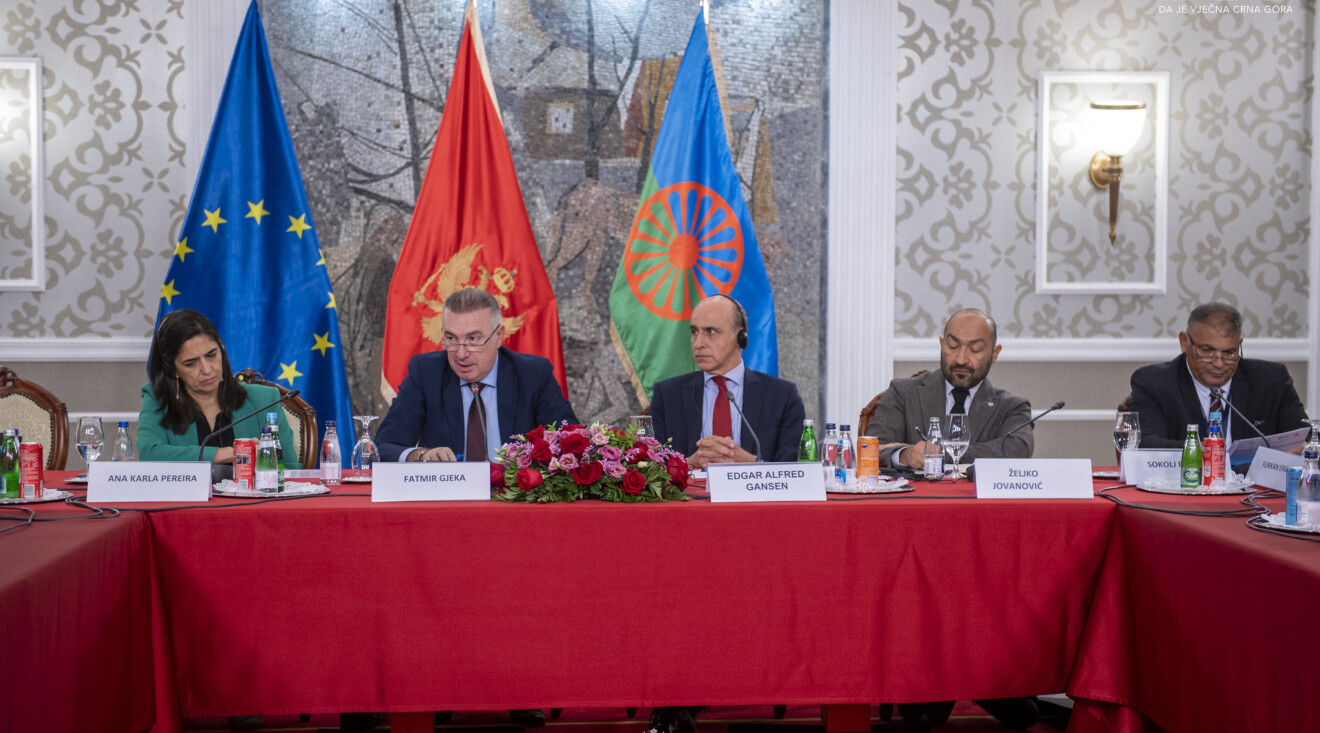
The 2nd European Roma Summit in Podgorica focused on the position of Roma in Europe, media roles, education, youth participation, and collaboration between institutions and civil society organizations.

Discussions included improving human rights, combating discrimination, preserving Roma identity, and increasing Roma representation in decision-making processes.

A panel on digital journalism highlighted the importance of media in empowering the Roma community and breaking stereotypes, emphasizing the need for more Roma voices in media and digital platforms.

Podgorica Summit

Roma in Montenegro

Published by:

Roma in Montenegro

Elvis Beriša, the executive director of the NGO “Walk with Us,” discussed the marginalization of the Roma community in Montenegro in a podcast episode titled “Roma and Political Parties – Between Representation and Marginalization.”

He described the current status of the Roma community as “very unequal” compared to other minority communities, a sentiment he has held for the past decade.

Beriša emphasized that perceptions of the Roma community are changing slowly, and there is a need for greater awareness of their ability to participate in policy-making at both state and local levels.

Montenegro and Roma Representation

Published by:

Montenegro and Roma Representation

The Montenegrin Roma Council is asking for electoral reform in Montenegro to guarantee the representation of Roma in the parliament. The article here is very critical of this, stating that the Roma Council is acting as a satellite of the Democratic Socialist Party (DPS).

In any case, reserved seats fro minorities are not a solution.

Arranged Marriages

Published by:

Arranged Marriages

An article on the still existing practice of arranges marrianges among Roma in Montenegro. Apparently, 17 cases of human trafficking were recorded in this context between 2020 and 2026 by the police.

The tradition of paying for the bride only exists among Vlach Roma and is probably due to the prevalence of slavery agianst Roma in Romanian lands. The owner of the bride had to be compensated.

Montenegro and Elections

Published by:

Montenegro and Elections

After a complaint by the ERRC, the Montenegrin Onbudsman wants to reform the registration rules that he sees as biased against Roma.

Education in Montenegro

Published by:

Education in Montenegro

The Ministry of Education and Science introduced Roma educational mediators in secondary education for the first time this school year, with the aim of promoting inclusion and reducing dropout of students from the Roma ethnic community. Through a public call, 20 individuals were selected to work directly with high school students and their families to overcome the educational and social challenges they face.

Let’s see what it really does.

Montenegro: Theatre

Published by:

Montenegro: Theatre

The Centre for the Affirmation of the Roma and Egyptian Population – CAREP begins the implementation of the project “To See Each Other Better – to Understand Each Other Deeper”, with the support of the Fund for the Protection and Exercise of Minority Rights. They will fund a Forum Theatre as a Bridge of Understanding between Youth and Communities and will include a two-day training for 10–12 young people, three forum theatre performances in three municipalities, a public forum “Roma language and culture – how much do we know about Roma”, as well as the production and distribution of information brochures for schools and institutions.

Romanes in Montenegro

Published by:

Romanes in Montenegro

On the occasion of the International Day of the Romani Language, on November 5, a panel discussion entitled “Our Language – Our Identity” was held in the gallery of the Cultural Centre in Bijelo Polje.

On behalf of the Municipality of Bijelo Polje, Miloš Kljajević said that this panel pays tribute to the rich cultural heritage of the Roma and the power of the language that has transmitted their stories, traditions and identity for centuries. He emphasized that the Romani language is a living witness to the long and complex history of the Roma.

Montenegro and Roma

Published by:

Montenegro and Roma

Another article about the lack of Romano representation in the parliament of Montenegro. The problem is somewhat more complex than the article states: Reserved seats for minorities are pretty much useless, and traditional parties shun Roma representatives.

This requires action from the Roma community which, in many countries has a close to 10% voting block, to act.

Montenegro and Elections

Published by:

Montenegro and Elections

The Roma Council in Montenegro informed that, based on the Law on Minority Rights and Freedoms and the Rules for the Election of Members of the Council of Minority Peoples, on 01.08.2025. it published a public call for applications for electors to participate in the electoral assembly for the election of members of the 5th convocation of the Roma Council. According to them, 27 applications for electors have arrived.

The small Roma minority is not really represented in the Montenegro parliament.

Montenegro: Mediators

Published by:

Montenegro: Mediators

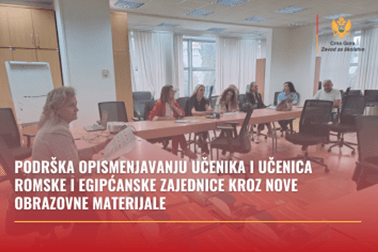
The Montenegro Ministry of Education and Science has announced that a competition has been launched for the recruitment of educational mediators to support the education of Roma students for the 2025/2026 school year. The plan is to recruit 85 people, including 50 mediators for primary education and 35 for secondary education.

Well, nice intentions, but will it suffice?

Montenegro, Elections, and Roma

Published by:

Montenegro, Elections, and Roma

The President of the Roma Council of Montenegro, Mensur Šalaj, criticized the latest changes to the electoral legislation, stating that key measures that would enable the political participation of the Roma community at the state level have been omitted.

“We consider it completely unacceptable that our appeal for reducing the electoral threshold so that the Roma community could have an authentic representative in parliament has been ignored for years,” said Šalaj.

He particularly criticized minority political parties, which, according to him, show neither solidarity nor political will to support this initiative.

Montenegro: Protest

Published by:

Montenegro: Protest

The Roma Council of Montenegro has strongly condemned the public statement of Veljo Stanišić, winner of the highest state award – the Thirteenth of July Award – who, commenting on Miloš Karadaglić’s decision to refuse the award, said in a public television appearance on TV Gradska: “That’s how Gypsies work.”

Montenegro and Romanes

Published by:

Montenegro and Romanes

Two more articles on the concerns of the Committee of Experts of the Council of Europe warnings that Romanes is still not part of formal education, although there is a dictionary and several projects. It also states that there is no strategy for training Romanes teachers and that the lack of qualified personnel remains an obstacle. It also warned that it has not been introduced into official use in any municipality, despite previous recommendations.

Montenegro and Minorities

Published by:

Montenegro and Minorities

The Committee of Experts of the European Charter for Regional or Minority Languages ​​has welcomed some policy measures implemented by Montenegro in the field of the protection of minority languages, but expresses serious concern about the lack of progress when it comes to Romanes, in particular in the areas of education, institutional use and teacher training.

rroma.org
en_GBEN