Roma in Portugal

Published by:

Roma in Portugal

Portugal lacks a new national strategy for the integration of Roma communities, endangering the survival of many organizations due to funding shortages.

Roma representatives criticize government delays and the impact on local projects, particularly in education and community mediation. The absence of a strategy has led to the closure of several associations, highlighting the need for stronger state support and engagement with Roma organizations.

Slovenia: Conference

Published by:

Slovenia: Conference

An international Roma conference is taking place in Murska Sobota, focusing on the progress, challenges, and future of the Roma community, twenty years after intensified policies were initiated.

Jožek Horvat Muc, president of the Roma Community Council, noted some improvements due to political measures, but highlighted ongoing issues like access to education, housing, and basic utilities. The conference emphasizes the need for greater Roma involvement in decision-making and a coordinated EU approach to address the community’s challenges.

Slovenia: Settlements

Published by:

Slovenia: Settlements

The Minister of the Interior and Public Administration, Franci Matoz, met with Mayor Gregor Macedoni to discuss current security conditions in the municipality of Novo mesto. The Mayor made himself known by taking drastic measures against Roma linking social services as well as warer and electricity to “good behaviour”.

The meeting focused on issues related to the Roma community and illegal construction, emphasizing the need for collaboration between various government departments and local authorities. The Minister confirmed the government’s commitment to addressing Roma issues through inter-departmental cooperation, acknowledging that narrow departmental approaches have hindered effective responses to challenges in southeastern Slovenia and Posavje.

Thessaloniki Settlement

Published by:

Thessaloniki Settlement

The article discusses ongoing issues in Thessaloniki, Greece, regarding the illegal settlement and eviction of Roma families from the Tsairia area, highlighting a complex legal and social backdrop.

Despite proposed solutions for relocating 12 families (about 200 members), progress has stalled due to resistance from the Roma community, citing cultural differences.

The European Court of Human Rights has mandated that the Greek state ensure the dignity of the Roma during relocation, while local officials express frustration over the situation affecting other citizens without homes.

Serbian Elections

Published by:

Serbian Elections

Upcoming elections in Serbia raise concerns about the political participation of national minorities, particularly the Roma community, which lacks political influence despite its size and significance. Roma in Serbia face numerous challenges, including unemployment, poverty, and inadequate representation in decision-making processes.

Despite these issues being highlighted during election campaigns, post-election results often fail to meet citizens’ expectations, prompting discussions about the need for greater political engagement from the Roma community.

Serbian Social Cards

Published by:

Serbian Social Cards

The UN Working Group on Business and Human Rights highlighted concerns over Serbia’s social protection system and the implementation of the Social Card Law, which has led to over 60,000 citizens losing social assistance since its introduction in 2022.

The report emphasizes the negative impact on vulnerable groups, particularly the Roma community, whose informal incomes are misclassified, resulting in loss of benefits despite insufficient earnings for basic living.

Recommendations include improving worker protection mechanisms, enhancing transparency in digital systems, and ensuring that public services do not discriminate against the most vulnerable citizens.

Housing in Slovakia

Published by:

Housing in Slovakia

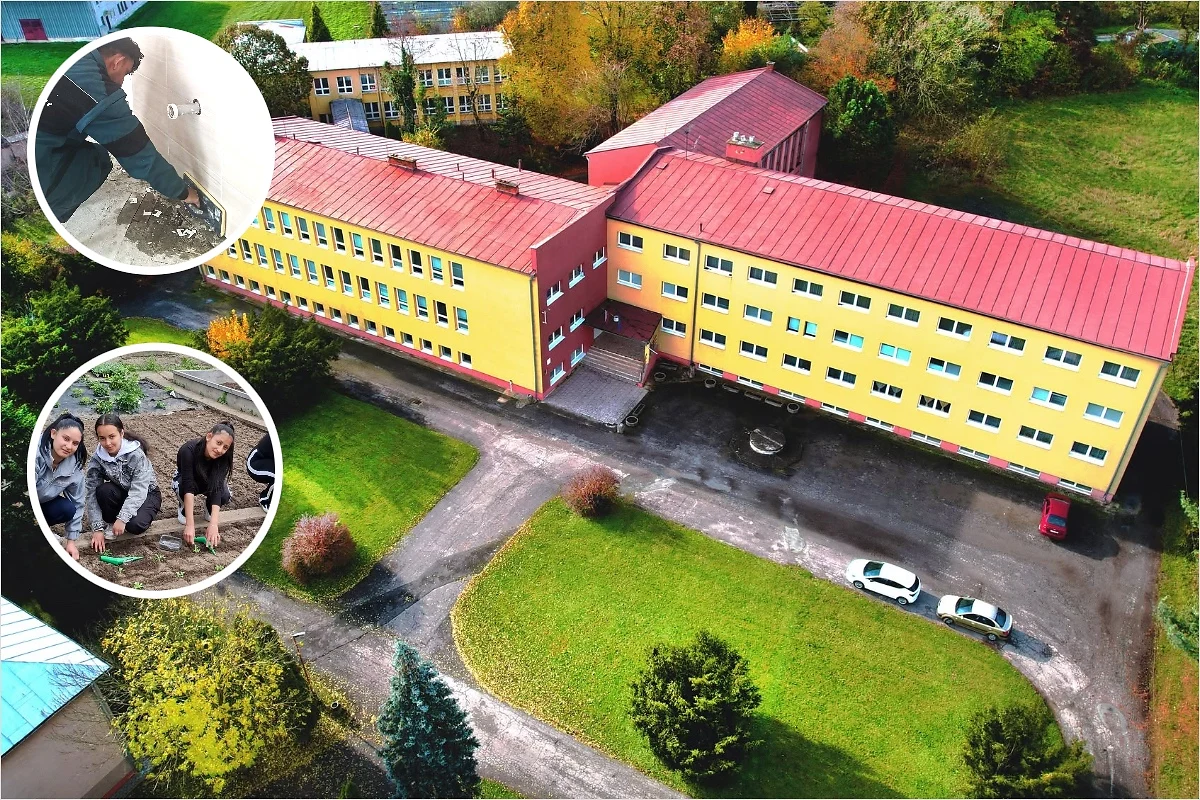
The city of Rožňava, Slovakia, has received 3.1 million euros for a transitional housing project that is intended to improve the conditions of the marginalized Roma community (MRK). As part of the plan, the municipality will reconstruct rental apartments in the Rožňavská Baňa district and build a new apartment building with ten apartments on Krátká Street. TASR was informed about this by the city’s PR manager Martina Beshirová.

There are currently 26 rental apartments in Rožňavská Bana, of which more than 20 do not have their own sanitary facilities. The residents of the apartment building, a total of 19 Roma families, use shared toilets and showers, which are located at the end of the corridor.

Moldova and Education

Published by:

Moldova and Education

Several articles in the Moldovan press about new measures regarding the integration of Roma in education. Starting from the 2026-2027 academic year, special admission quotas and scholarships will be available for Roma students in schools, colleges, and universities, with 10% of available spots reserved for them.

Roma students will be exempt from admission fees and can access funded places, with a total of 120 individuals receiving financial support, including monthly scholarships of 1,200 lei.

The initiative aims to eliminate barriers to education for Roma children and ensure equal opportunities, as stated by Ivan Duminica from the Ministry of Education and Research.

The Ivanovitch

Published by:

The Ivanovitch

This article speaks about the Ivanovitch (in its French spelling, originally Ivanović), a Roma family from the Vojvodina who emigrated to France and became famous there. The father, Jarko, is credited with the composition of the Roma hymn “Djelem Djelem”. His two sons, Slobodan and Petro were famous musicians under the name “Les Tziganes Ivanovitch”. Petro married Natacha Bielenberg, a Russian Romni whose mother, Raja was a famous dancer in the Theatre Romen in Moscow.

Young Roma in Slovenia

Published by:

Young Roma in Slovenia

The article discusses an international roundtable event focused on creating an open society for youth, held in Murska Sobota, Slovenia, which brought together various stakeholders in youth work.

Key topics included challenges faced by marginalized youth, the importance of education and active participation, and the role of local communities in supporting youth initiatives.

Participants emphasized the need for collaboration among local communities, schools, NGOs, and youth to foster inclusive and quality youth work, highlighting the significance of international programs like Erasmus+.

Roma History and Inclusion

Published by:

Roma History and Inclusion

Panagiotis Charitos is a prominent social worker in Greece, dedicated to the education, social inclusion, and empowerment of Roma communities, with a strong academic background and extensive professional experience.

He has initiated various programs and projects aimed at improving educational access for Roma children, including the establishment of a Creative Activity Center and a Football Academy for Roma children.

Charitos has also been active in local politics, serving as a municipal councilor and advocating for Roma rights and social policies that promote equality and inclusion.

He is involved in the first Greek magazine dedicated to the history and culture of the Roma, titled “Unknown Culture of the Roma,” aims to document and preserve Roma heritage and promote positive examples from the community.

The magazine is a collective effort involving Roma scientists, educators, and community members, focusing on the rich traditions, values, and contributions of the Roma people.

It seeks to combat stereotypes and promote understanding between Roma communities and wider society, emphasizing the importance of equal opportunities and respect for Roma culture.

Football and Roma

Published by:

Football and Roma

Two articles in the Serbian press about Roma footballers.  The articles highlight the significant contributions of Roma players in the history of the FIFA World Cup, mentioning legends like Hristo Stoichkov, Gheorghe Hagi, and Ricardo Quaresma.

They emphasise the achievements of these players, including Stoichkov’s pivotal role in Bulgaria’s fourth-place finish in 1994 and Quaresma’s pride in his Romani heritage.

The piece calls attention to the ongoing underrepresentation of Romani players in contemporary football, despite their historical impact on the sport.

A Mahala against Drugs

Published by:

A Mahala against Drugs

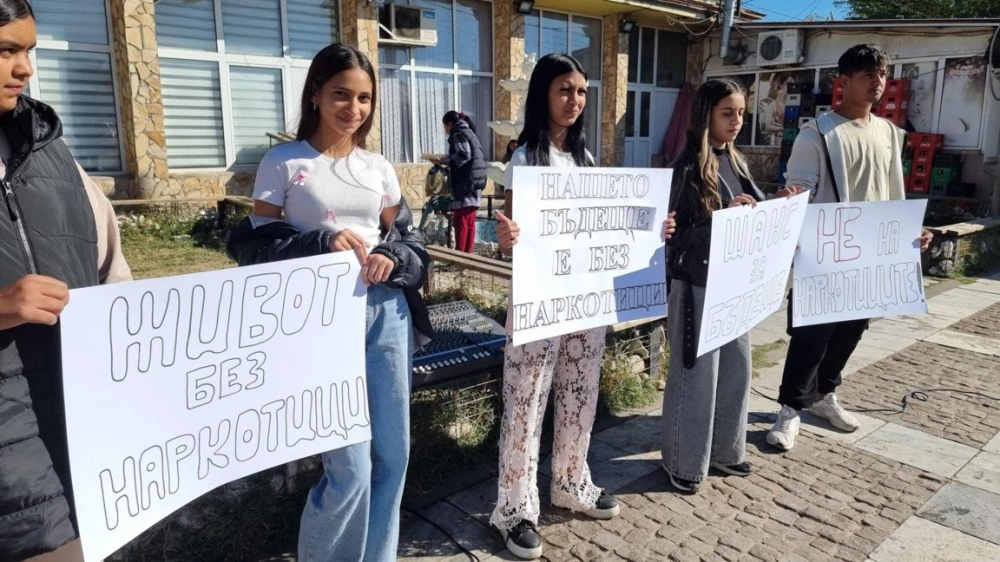
Roma residents from the “Hristo Botev” neighborhood in Plovdiv protested against drug dealers and drug distribution in their area, demanding effective measures to combat the issue.

The demonstration, titled “No to Drugs,” highlighted concerns for the safety and health of children and young people in the Roma community.

Local residents called for more active police intervention, with support from local boxing star Boris Veliev, who emphasized the need for justice and a drug-free environment for families.

Roma History

Published by:

Roma History

Two articles in the Greek press about the origins and history of Roma. These articles were propted by a feud on live TV Greek singer Vasilis Paiteris continues his public feud with MEP Afroditi Latinopoulou, questioning her stance in times of war and admitting he mistakenly voted for her party due to a friend’s candidacy. Paiteris labels Latinopoulou a “big racist” for her views on the Roma community, asserting that he will only apologize if she retracts her derogatory comments about them. During this, they both used the term “gyftos” that is considered to be pejorative.

The two articles are quite astonishingly accurate, with some debatable points. They also dwell on the origins of the various names given to Roma.

Disguised Discrimination

Published by:

Disguised Discrimination

According to this article, mass police operations against Roma communities in Greece reflect a broader European trend of redefining racial discrimination under the guise of crime prevention and public order maintenance.

The operations, characterized by surveillance drones and aggressive police tactics, have targeted 152 Roma communities, with over 76 operations conducted in just six months.

The rhetoric of crime prevention is used to justify systemic racism against Roma, with the Greek model potentially serving as a template for similar actions across Europe.

French Chronicle …

Published by:

French Chronicle …

News this week in France are still dominated by the fire on the site of the former Roma camp in Chambly. Its origins are unclear, and firefighters needed several days to extinguish it. The municipal opposition in Nantes accused the social services of having registered Roma to vote for the current socialist mayor. Also near Nantes, a mayor who was strongly opposing a housing scheme for Roma has now endorsed it because of the already spent money (so he says) but has introduced strong surveillance measures.

Switzerland and Jenische and Sinti

Published by:

Switzerland and Jenische and Sinti

The Swiss Federal Department of Home Affairs plans to establish an independent commission to investigate injustices against the Yenish and Sinti communities.

This decision follows calls from scholars and representatives of the affected communities for a thorough investigation into historical injustices.

Critics have expressed concerns over limited access to archival files and the need for a comprehensive inquiry into the persecution faced by these minorities.

Budapest Walk

Published by:

Budapest Walk

The new Józsefváros walk of the UCCU Foundation takes stock of the obvious and often invisible places of the Roma cultural presence.

This is not the first city walk of the UCCU Roma Informal Foundation, but the first one in Józsefváros – the foundation operates in the district, previously in H13, now in József utca. UCCU is not an average Roma advocacy organization, it is characterized by the self-awareness and independence of the Z generation (20–30 years old). The walk was also led by two young people, Norbert Horváth, who is already beyond his university years, and Csilla Berki, who is still a university student, who were also accompanied by Szilvia Szénási, the head of the foundation.

Crime in Greece

Published by:

Crime in Greece

The article says that in 2024, 70% of theft and burglary gangs in Greece were reported to be composed of Roma individuals, raising concerns about crime and ethnicity.

The article discusses the public’s desire for equality under the law, regardless of origin, while highlighting the perception of crime linked to specific communities.

It critiques the Greek political system for failing to address the root causes of poverty and social exclusion, advocating for equal rights and obligations for all citizens.

rroma.org
en_GBEN