A report on the challenges faced by Roma in finding housing in London has been published and there are two events that present its findings.
https://www.facebook.com/photo/?fbid=1024254346527897&set=a.496198572666813
A report on the challenges faced by Roma in finding housing in London has been published and there are two events that present its findings.
https://www.facebook.com/photo/?fbid=1024254346527897&set=a.496198572666813
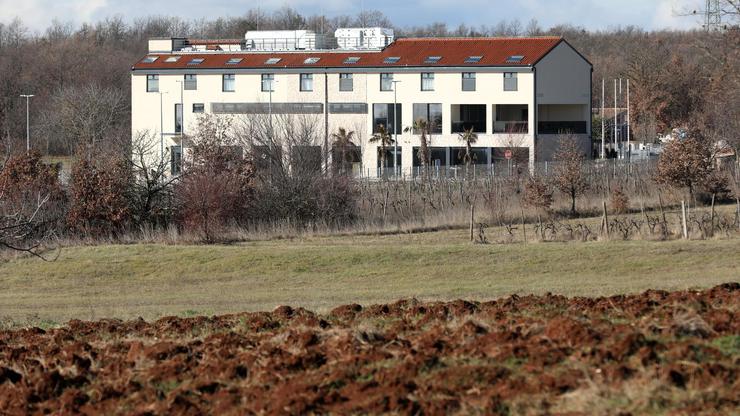
Improving housing for the marginalized Roma community (MRK), the rehabilitation of illegal landfills and the education of children are topics that the mayor of Pečovská Nová Ves, Jaroslav Dujava, wants to open during Wednesday’s field meeting of the Slovak government in their municipality.
That would be a good start…
A pilot project for the construction of modular houses in a Roma settlement in the town of Veľký Šariš will implement many years of experience with similar construction in the Netherlands. Well, difficult to fathom what similar constructions occurred in the Netherlands, as segregated settlements are not common there…
Alexander Daško, the Slovak plenipotentiary for Roma communities also emphasized the merit and motivational factor. “Future tenants will not get anything for free,” he declared. He explained that the condition for obtaining rental housing is participation in the construction. “The contribution will be at least 20 percent of the costs in the form of participation in the construction work.” He also pointed out that tenants will not be able to create debt on energy and water supplies, and they will also be able to reduce the set rent based on compliance with the rules. “Zero debt, compliance with compulsory school attendance of children, maintaining order, regular employment, all of this will be able to reduce the amount of rent.”
This is a total alibi exercise that builds up on stereotypes that Roma abuse the social system. The real issue are land rights, connection to municipal services (water, electricity), and of course, work.
The largest horse fair and gathering of travellers and Roma in the UK is almost there. A guide to it. But alos a tabloid article about communities barricading, the usual stereotypical rants.
Bad.
Data collection as part of the sociographic mapping of Roma communities will continue until the end of June. This was announced at a press conference on Tuesday by the Plenipotentiary of the Slovak Government for Roma Communities Alexander Daško and the staff of his office. The reason is the effort to integrate data from the maximum number of municipalities with a relevant presence of Roma communities into the census.
What is remarkable, is that this atlas doesn’t really coincide with the official census …
In a Roma settlement in Velykyi Berezne, in Transcarpathian Ukraine, right on the Slovak border, a confrontation between Ukrainian border guards and local Roma escalated. Background is not clear, but Roma threw stones at the border guards, and they fired live rounds. There are wounded, apparently on bth sides, although between stones and rifles, this can’t really be equitable.
The Bulgarian children’s Roma Festival “Open Heart” gathers over 1,500 children from all over Bulgaria. The program includes exhibitions, music, theatre, crafts, and traditions. The main emphasis this year is the desire to give a voice not only to children, but also to Romnja, cultural figures and community leaders.
Almost every third child in Bulgaria lives in material deprivation, according to data from the National Statistical Institute for last year. The most affected by the phenomenon are Roma children – over 2/3 of them, while for Bulgarians the indicator is below 1/5, and for children of Turkish origin – nearly 1/3.
Another news we do not really need. Romnja fought each other in the centre of Sofia, the Bulgarian capital. The action took place near St. Peter’s Park, around Konstantin Velichkov Blvd. in Sofia.
According to a wtiness, Romnja literally grabbed each other by the hair in a mass melee. However, he was unable to count how many women participated in the fight. “They were like wild animals. Imagine animals in a zoo fighting for prey. The sight was just like that. They just made my eyes water,” he says on Facebook.
According to him, police arrived at the scene in a flash, and some of the brawlers quickly spat on their heels. The police are currently searching for the attackers.
The French Institute of Bulgaria is opening its doors to Roma culture from June 2 to 5, 2025. Through screenings and evenings of discussions, this series will highlight their history, creativity, and the diversity of their artistic expressions across Europe.
Unfortunately, being French, they bring a baggage of stereotypes starting with the names of “Roms, Tsiganes, Manouches, Bohémiens, Romanichels, Sintis, Gitans…” And then go on with saying that Roma reside in Europe since the XVth century. This in Bulgaria, one of the cradles of Roma culture as part of the Byzantine Empire where Roma have been for more than a thousand year.
One can only wish that journalists manage to learn something at some point …
In its 2024 annual report, the Council of Europe’s anti-racism body, the European Commission against Racism and Intolerance (ECRI), identifies four key policy challenges for European states: combating the use of racial profiling by law enforcement, addressing school segregation of Roma children, ensuring equal rights and dignity for transgender and intersex people, and strengthening national equality bodies.
Unfortunately, the usual in France: Closure of 3 Roma camps in the north near Lille, with the question for Roma about where to go next; a new Roma squat in Villeurbanne near Lyon; and in Toulouse, another camp will be soon dismantled.
A very nice video on the Zargari Romanes dialect. Zargari are Roma who went back eastwards at some point in history and settled in Iran. This is underlined by the number of Greek words in their dialect, which is on par with other Balkan Romanes variants.
We hope to hear more about them!
At the end of October last year, suspicions of the controversial use of state money for Roma in the municipality of Krško were raised. The municipality, led by Janez Kerin, outsourced almost 80 thousand euros worth of workshops and training to the municipal construction company Kostak, about which none of our interlocutors knew anything
At the same time, the municipality, under unusual circumstances, allocated another 20 thousand euros of money to an association founded by Roma councilor Dejan Brajdič. Mayor Kerin needed his vote to support the planned projects. At the time, the municipality denied accusations of misuse of funds received from the state.
This is now being investigated by the police.
A round table held in Slovenia on Roma integration stated that one of the key challenges is the legalisation of Roma settlements. Roma representatives, however, warn that solutions and legislation on them are often adopted without them.
The German government is effectively abolishing the position of Commissioner for Combating Antigypsyism. The position will not be filled, a spokeswoman for the Ministry of Family Affairs told taz. Mehmet Daimagüler, who held the position until a few weeks ago, told taz: “Abolishing the office would be a slap in the face for the Sinti and Roma in Germany.”
An article about the police action in the French speaking cantons of Switzerland that attempts to prevent Roma travellers from coming to Switzerland. The Police in Valais even illegally blocked a highway to prevent Roma from passing. They issue fines, but also summons.
This is clearly racist.
Visitors can expect real Romani cimbalom, authentic flamenco and for the first time in its almost thirty-year history, Romani musicians from Greece will perform at the festival,” Nikolas Ferenc, a spokesman for the Khamoro festival, told the Romea.cz news server.
Yesterday evening was opened by the band of violin virtuoso Ivan Herák, one of the most sought-after Romani primas in our country. His cymbalom band features Romani artists with musical training, including singer Erika Nováková.
Roma music is a melting pot of all genres, it is diverse and fascinating, says linguist and musician. Ondřej Skovajsa, a literary historian, ethnomusicologist and chairman of the Giľora association, which records and makes contemporary Roma songs accessible in audiovisual form, as well as linguist and musician Martin Gális speak about music and Romanes. The end of May belongs to the Khamoro World Festival, which is a traditional celebration of Roma culture. But do young Roma still speak Romanes in everyday communication?
The Slovak parliament has passed a law that can take away benefits for refusing a work opportunity. Opposition warns of discrimination against Roma. Their concern is that Roma will be offered menial works (such as in the Hungarian Közmunka), and will be no longer entitled to anything afterwards.