Category Archives: News Eastern Europe

Integration

Published by:

Integration

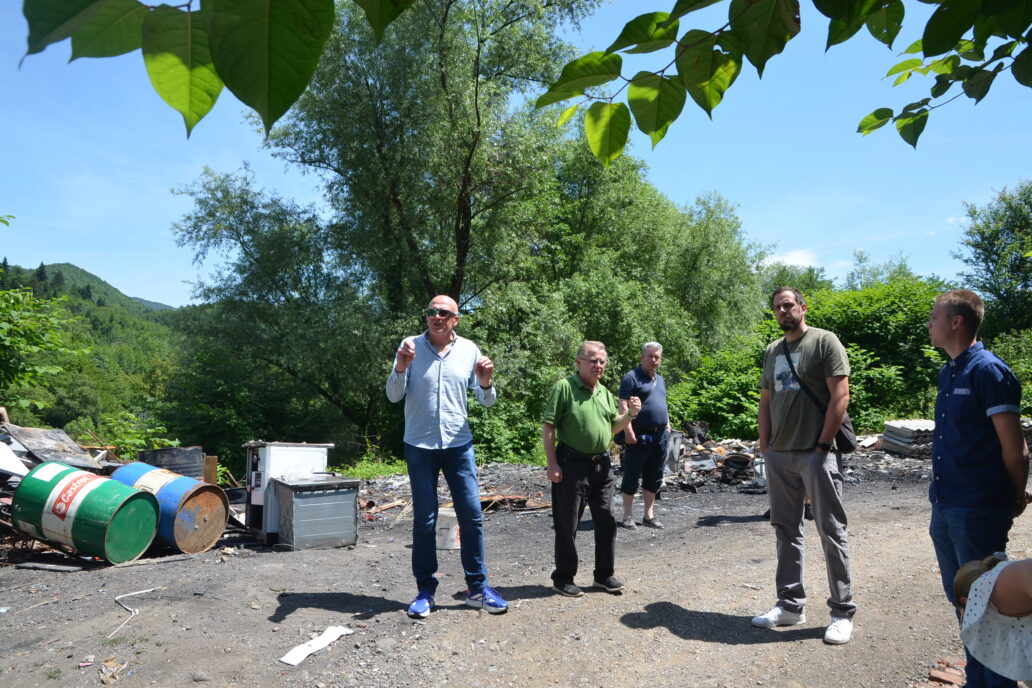
The Dobrich Municipality (Bulgaria) reported on progress in the integration of Roma communities. During the meeting, the results achieved from the implementation of the ROMACT approach were presented, as well as the main challenges faced by the municipality in the integration process.

Bulgaria and Crypto

Published by:

Bulgaria and Crypto

$5,000 was the initial minimum contribution for the victims to join the powerful fraudulent cryptocurrency scheme that was broken up by the “Economic Police”. The scheme targeted minorities and was run by a 48-years old Rom from Plovdiv.

Bulgaria, Elections, and Roma

Published by:

Bulgaria, Elections, and Roma

Police raided a financial house (sic.) in the Roma neighbourhood of Fakulteta in Sofia, where a list of names and amounts was found besides six thousand Euros in cash. The police is suspecting election bribery and arrested several persons among which Kiril Kirilov, a know murky figure often called the Japanese.

Vera Bila

Published by:

Vera Bila

Věra Bílá, who was born on May 22, 1954 in Rokycany as one of Karol Gini’s six children, was a phenomenon of Romani music at the turn of the millennium. She sang for Bill Clinton at the White House, filled the Paris Olympia and was on her way to becoming the most famous Czech singer in the world. However, her career was later affected by the deaths of her husband, son and gambling. In March, we commemorate the seven-year anniversary of her death.

Jakub Jarý

Published by:

Jakub Jarý

Jakub Jarý’s life journey proves that if a person really wants to, he can overcome obstacles that may seem insurmountable to others. He is now a medical doctor in Czechia.

Even though he comes from an excluded locality and grew up in a working-class family, he was set up from the beginning to want to fight for a better life. As he himself says: “No shortcuts will help and in the long run they will not bring anything good, I am convinced of that. If young people want to live in better conditions than the ones they grew up in, they can only achieve this through diligence and work.”

Romani Pupils

Published by:

Romani Pupils

An article about Romani pupils in Polish schools. It says that for a Roma child, the threshold of school is often a threshold to a completely different linguistic world. In homes, especially in groups like Polska Roma, which cultivate a stronger tradition, the first language is Romani. It is an intimate, homely language, acting as a guardian of identity. At school, students must rapidly adapt to Polish grammatical structures to master reading and writing, which represents a tremendous cognitive effort.

Well most of them are bilingual… So not sure about that statement.

Competition

Published by:

Competition

The Slovenian Office for Nationalities has announced a prize competition for diploma, master’s and doctoral theses on Roma topics. The purpose of the competition is to encourage research activities of undergraduate and postgraduate students in the field of Roma topics and to raise awareness of the need to effectively address the challenges of social exclusion and poverty of members of the Roma community, prevent antigypsyism and discrimination against Roma, promote the inclusion of members of the Roma community and their participation in the design and implementation of solutions with the aim of building trust and preserving Roma culture and identity.

Lithuania and Roma

Published by:

Lithuania and Roma

The Department of National Minorities under the Government of the Republic of Lithuania has appealed to the State Language Inspectorate, the Chancellery of the Government of the Republic of Lithuania, the Ministry of Culture, and the Main Commission on Official Ethics to evaluate the public statements made by the head of the State Language Inspectorate regarding the use of the words “Negro” and “Gypsy.”

Well, it’s about time …

Education and Roma

Published by:

Education and Roma

On Thursday, March 25, over 30 young Roma from across Moldova, members of the Young Roma Network of the Republic of Moldova, presented the “Young Roma Manifesto”—a document outlining clear educational priorities. These include ensuring equal access to quality education, supporting students from vulnerable backgrounds, and continuously developing educational policies tailored to the needs of Roma communities. Thousands of teachers participated in public discussions on the concept of school subjects. During the event, held at the Ministry of Education and Research, young people highlighted the positive impact of specialized educational programs, especially scholarships for academic achievement, intended for Roma students in lyceums, vocational schools, and universities.

Serbia and Child Marriage

Published by:

Serbia and Child Marriage

A round table presented the results of the analysis of the project “Roma Women’s Activism in the Protection of Roma Girls from Violence Caused by Child Marriages”, which aims to reduce the rate of child marriages among the Roma population, and the 10 cities covered by the project, including Vranje, which has the highest rate of child marriages.

Slovakia and Strasbourg

Published by:

Slovakia and Strasbourg

The European Court of Human Rights (ECHR) in the case of Slovak women Katarína Kuruová and Helena Horváthová against the Slovak Republic ordered the Slovak Republic to pay a total of 28,560 euros. The reason is the violation of Article 3 of the European Convention on Human Rights on the prohibition of torture and Article 14 on the prohibition of discrimination.

This case concerns an incident between the two applicants – two Romnja sisters – and the police, which took place on 23 July 2019. On that day, the police detained the women in the village of Milhosť in eastern Slovakia and took them to the police station in the village of Čaňa, where they remained until the early hours of the following morning. They were not questioned during their detention and, according to the ECHR judgment, were described in the detention records as a “gang of local Romani women”.

In their application, the applicants allege violence by the police, which they described as “unjustified, disproportionate and based on bias against them”. They say the investigation into the use of such force was not thorough and independent.

Switzerland and Bulgaria

Published by:

Switzerland and Bulgaria

The Ambassador of the Swiss Confederation H.E. Pierre Hagmann visited the office of the Amalipe Center and two of the institutions with which the Center works in close partnership – Sofia University “Kliment Ohridski” – the village of Kamen and the Municipality of Strazhitsa, to get acquainted with the organization’s activities. The conversations were about the Roma community and the challenges facing it, education, the contribution of the Swiss-Bulgarian Development Program, the role of NGOs and the support of the Swiss Embassy and the Ambassadorial Group on Roma Issues. The subsequent visit to the village of Kamen and the town of Strazhitsa continued and detailed these conversations.

Bulgarian Project

Published by:

Bulgarian Project

In the period 2023 – 2025, the Municipality of Lukovit implemented the project “Future for Children in the Municipality of Lukovit”, funded by the Human Resources Development Program 2021 -2027. As a result of the implementation of the projects, conclusions are drawn about the growing marginalization of certain places and neighbourhoods and the deepening challenges in terms of poverty and inequalities, including the lack of access to health, social, communal and other services for Roma groups. In the villages of Belentsi and Petrevene – a large percentage of Roma families with children, at risk of poverty, not speaking Bulgarian and for this reason – difficulties in the social and educational integration of children in kindergarten and school. In the village of Bezhanovo – a large number of families with eight to 10 children, in extreme poverty and at risk of marginalization. In the town of Lukovit – a compact Roma population in the “Iztok” district – according to expert observations, over five thousand people”, the report says.

  • Общинските съветници в Луковит одобриха всички предложения от дневния ред. In: Utro Ruse. 26.03.2026. https://utroruse.com/amp/?id=1226934

Slovakia Condemned

Published by:

Slovakia Condemned

The European Court of Human Rights has ruled that the beating of two Romani sisters by Slovak police, their detention in a toilet and cleaning cupboard, and a deeply flawed investigation violated both the prohibition on inhuman treatment (Article 3 of the European Convention on Human Rights) and the prohibition of discrimination (Article 14 of the Convention).

Zagreb and Kris

Published by:

Zagreb and Kris

The 2nd International Conference on “Roma Customary Law” opened today at the Zagreb Museum of Contemporary Art, an event that could permanently change the status of Roma tradition on a global scale. The main news of the conference is the launch of an initiative to include Roma customary law, known as Romanipen or the Kriss system, on the UNESCO list of Intangible Cultural Heritage of Humanity.

Croatia: Racism or Not?

Published by:

Croatia: Racism or Not?

In Premantura, an iftar evening organized by the Croatian Roma Association Kali Sara, led by Suzana Krčmar, to celebrate Ramadan, turned into a dispute between the organizers and the restaurant owner. According to the restaurant, many more guests came, and a 1’800 euro bill was left open.

Croatian MP Veljko Kajtazi also attended the event, who also gave a statement to local media about the incident.

Novo Mesto Story

Published by:

Novo Mesto Story

For a change, a positive story about Roma in Novo Mesto, Slovenia. Đani, Nejc and Samo. Three names that could just be part of the everyday city hustle and bustle, are today something more. They are proof that it is possible – if you want it. All three are members of the Roma community and full-time employees of the Novo Mesto Municipal Corporation, where they take care of the city’s order every day. They empty bins, collect waste, maintain public spaces. The work is not always easy, but it has weight. And it has meaning. When you meet them in the field, you don’t just see workers – you see people who were given an opportunity and took it seriously.

Serbian Elections and Vučić

Published by:

Serbian Elections and Vučić

The DW article had repercussions: Accusations of vote buying, new registration of voters, and also, Roma Sherifs (sic.) who promised Vučić that 90% pf the Roma will vote for his list.

Bad.

Serbian Elections and Roma

Published by:

Serbian Elections and Roma

A reportage by Deutsche Welle ahead of the local elections in ten municipalities in Serbia. The DW team was in one of them, in Bor, where there is a lot of talk about the bought votes of local Roma and a sudden increase in the population before the elections.

Promises are made to Roma before those elections, promises seldom held …

Slovakia Statistics

Published by:

Slovakia Statistics

The employment of Roma from excluded communities depends heavily on whether there is a crisis or growth, the IFP Chart of the Day shows. While only 16% of them were working in 2013, in the following six favourable years it was on average 24%. However, the pandemic interrupted this trend and the subsequent recovery has been slow.

rroma.org
en_GBEN