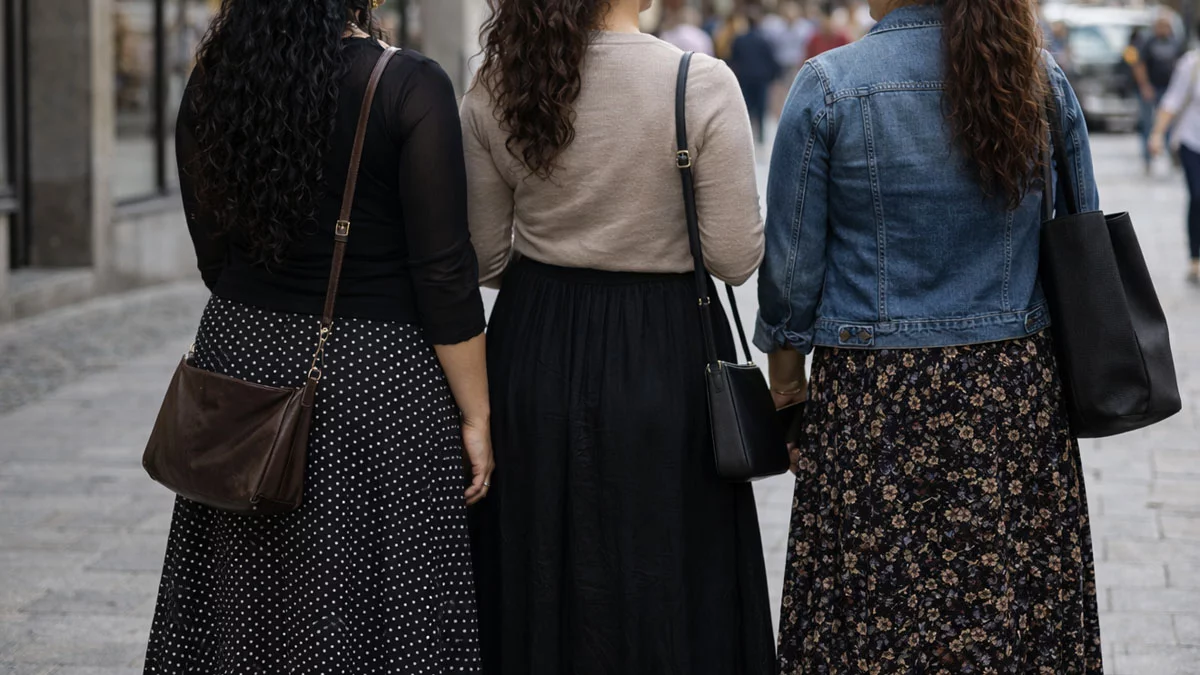
An article about Roma cloting in the Polish press.
Classic ethnographic studies emphasize that clothing in Romani communities served a social and symbolic function.
Ethnographer Lech Mróz, author of, among others, The publication “Gypsies: Diversity and Intolerance” pointed out that dress was one of the most visible signs of cultural distinctiveness and an element in maintaining intergroup boundaries. However, it was not immutable – it evolved along with living conditions.
For women, traditional clothing – long, full skirts, covered shoulders, and expressive jewelry – was associated not only with aesthetics but also with social norms, including the rules of ritual purity (marime), present in some Romani groups.
There is no single “Roma costume”.
- Kolor, duma i zasady. Strój romski to coś więcej niż folklor. In: Korso. 24.02.2026. https://korso.pl/romowie-w-mielcu/kolor-duma-i-zasady-stroj-romski-to-cos-wiecej-niz-folklor/qwkGDIgtJWnE3LWbWkRQ







 EN
EN  DE
DE  FR
FR