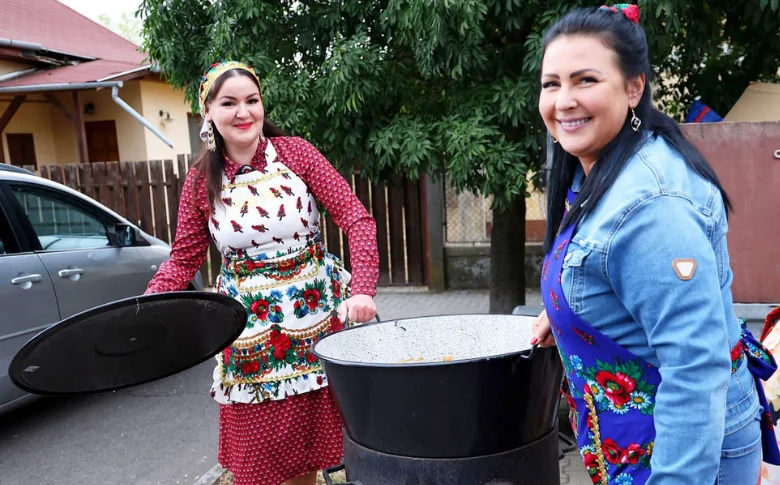
A team from ÁGOTA Community participated in the Kivilágos Kivirradtig Festival cooking competition, showcasing traditional Roma dishes and winning a silver award.
The event highlighted the importance of community and mentorship for young people living in residential homes, with a focus on shared experiences and cultural pride.
The festival served as a platform for young talents, like 18-year-old Nikólasz, who is training to be a chef and actively contributes to the community through cooking.
- Roma ízekkel álltak a bogrács mellé, ezüst minősítéssel tértek haza az ÁGOTA Közösség fiataljai (galéria). In: Kecskemet 365. 25.09.2026. https://kecskemet365.hu/2026/09/25/roma-izekkel-alltak-a-bogracs-melle-ezust-minositessel-tertek-haza-az-agota-kozosseg-fiataljai-galeria/










 EN
EN  DE
DE  FR
FR