Tag Archives: Music

Lolita Cercel

Published by:

Lolita Cercel

Lolita Cercel, created virtually with the help of artificial intelligence, is a star in Romania and beyond. Her genre, “Balkan trip-hop”, combines traditional Roma melodies with modern pop, dance and electronic rhythms and has long since become part of the mainstream music scene. But, in addition to fame, she is also the target of critics. “The instrumentalization of Roma culture”, someone called her. According to critics, while real Roma artists are often underestimated, a “virtual, racially charged and dehumanized Roma identity” is suddenly gaining ground.

Vera Bila

Published by:

Vera Bila

Věra Bílá, who was born on May 22, 1954 in Rokycany as one of Karol Gini’s six children, was a phenomenon of Romani music at the turn of the millennium. She sang for Bill Clinton at the White House, filled the Paris Olympia and was on her way to becoming the most famous Czech singer in the world. However, her career was later affected by the deaths of her husband, son and gambling. In March, we commemorate the seven-year anniversary of her death.

Fenice, Venice

Published by:

Fenice, Venice

On Tuesday, April 7, 2026, at 10:30 a.m., Romani music will be presented in the Gran Teatro La Fenice in Venice, with a stunning concert in the Sale Apollinee. The event is held to mark International Roma and Sinti Day, celebrated on April 8, and the third Romani Culture Week (Romani Week).

The concert will feature Gennaro Spinelli, violin soloist, and Santino Spinelli, accordion soloist, who have performed on some of the world’s most important stages for years.

Jovan Živadinović

Published by:

Jovan Živadinović

Jovan Živadinović, a Roma singer and songwriter from Serbia, debuted with the single Sve je isto in July 2021. A year after his first album, he participated in the Eurovision Song Contest 2023 with the song Greh, which led him to the final of the competition.

The second album brings a sonic blend of modern electro pop, club aesthetics and the discreet sensibility of soul and rhythm and blues. Through 19 tracks, the album follows a path of self-exploration, emotional conflicts and attempts to understand one’s own identity, from a short introductory confession by Džipsii’s mother to the final track “Kuda”.

Romano Vod’i

Published by:

Romano Vod’i

Rehearsals for the Romano voďi (Roma Soul) singing group take place regularly every Tuesday. For the children, it is a fixed point in the week that they look forward to. “We rehearse in the facilities of the Mutual Coexistence organization on Bieblová Street in Ostrava,” says Milan Giovanni Bindatsch. However, it is not just about “singing”. According to him, the key is to work systematically and sensitively. “It’s not just about singing itself, but mainly about working with the voice and listening to others so that the children sing in harmony with each other and don’t shout at each other,” says Bindatsch.

Halgata

Published by:

Halgata

Long and sad Roma songs that sing about losses, poverty and injustices – the so-called halgáta. This musical tradition, which is passed down from generation to generation among the Roma, could gain official recognition. Dozens of people, including researchers and members of the Roma community, are trying to register halgáta on the national cultural heritage list.

Ida Kelarova

Published by:

Ida Kelarova

At the end of last year, a new children’s choir was created in Ostrava, which arose from the efforts of singer and choirmaster Ida Kelarová to find new talents for her ensemble known as Čhavorenge (Romani for “Child”). The children who did not succeed in the audition wanted to continue singing together, and so, thanks to cooperation with local organizations Vzájemné soužití, Ostravská nota, Velká náruč and with Milan Bindatsch from the Ibsenova Elementary School, a new ensemble was born. Its creation brought with it an unexpected effect among the residents of excluded localities – a strong emancipatory and activating effect.

Artist Workshop in Bulgaria

Published by:

Artist Workshop in Bulgaria

The Bulgarian artist Rada Tsankova, who has lived and worked in Paris for 30 years, arrives in Bulgaria to open two retrospective exhibitions – today, February 17 in Sofia at the new space “Monument” and on February 23 at the “Papillon” gallery in Varna.

As part of her tour of her natve country, she will hold several workshops. One of them with Roma on February 20th. The artist will hold a creative workshop with the Music Instead of the Street Association, which helps children of Roma origin or in difficult financial situations to have access to classical music. The association was founded by the world-famous Sliven violinist of Roma origin Georgi Kalaidzhiev. The focus of Tsankova and the children’s joint work is “How to Present Music Through Visual Art”.

Halgato

Published by:

Halgato

The specific Romani musical genre halgató, characterized by long and sad songs, could receive official recognition and be included on the list of intangible cultural heritage. Now, the bearers of the tradition are striving for this together with experts, according to whom it is an important living part of the Roma identity, which is passed down between generations, and should also have its place on the UNESCO list.

Romane Gilja

Published by:

Romane Gilja

Singing out of suffering. Romani halgató singing is passed down through generations, it is important for the community and identity

Romani halgató singing is a specific musical genre. It is characterized by long, sad songs, usually accompanied by light guitar or violin accompaniment. The musical tradition could gain official recognition. Dozens of people and bearers of this tradition, including researchers and members of the Romani community, are seeking to have the halgató genre listed on the national list of intangible cultural heritage.

Romania, Music, and AI

Published by:

Romania, Music, and AI

A singer with artificial intelligence was created in Romania. She is called Lolita and already has thousands of fans and millions of views on social networks, local media reported in their reports on the subject.

The creator of Lolita is a young man from Bacău, who calls himself Tom. He is a visual designer by profession with over ten years of experience in editing photos and videos.

“Lolita sings in Romanian. She is a project that connects the old with the new. A specific violin sound, traditional music performed by Roma orchestras, is mixed with modern instrumental accents. Several styles are intertwined,” explains Tom, who writes the lyrics of the songs.

Santo Spinelli in NYC

Published by:

Santo Spinelli in NYC

On the occasion of International Holocaust Remembrance Day, the Concert for the Day of Remembrance / Samudaripen, promoted and organized by the Union of Romani Communities in Italy (UCRI), will be held on February 2 at 8:00 p.m. at Carnegie Hall in New York. The event, organized with the patronage and support of the Italian Cultural Institute in New York, UNAR at Palazzo Chigi, and the major European Roma and Sinti organizations—ERGO Network, ERIAC, and IRU—is intended to contribute to the recognition of Samudaripen, the genocide of the Roma people during World War II, alongside the Holocaust, through the universal language of music. The concert features two internationally renowned artists, Gennaro Spinelli, violin soloist, and Santino Spinelli, accordion soloist, accompanied by members of the European Peace Orchestra. This ethno-symphonic project combines revisited classical repertoire and traditional Romani music, along with several original compositions, offering a musical journey of strong symbolic and cultural value.

Poland and a Wedding

Published by:

Poland and a Wedding

The buzz surrounding the high-profile “wedding” of Viki Gabor a singer and Romni doesn’t cease., According to the news,  she became the wife of  Giovanni Trojanek  “according to Roma tradition”. Fans of the artist were shocked, and well-known celebrities and showbiz figures are being asked for their opinions. In a recent interview, Anna Popek added her two cents. The presenter stated that 18 “is a great age to get married.” “There are certain standards, and then there are these poor, unhappy, outdated brides in their thirties who can’t find a man,” she blurted out.

Roma Street Music

Published by:

Roma Street Music

Still more articles on the interdiction of Roma street musicians in some Croatian cities. From Osijek to Sinj, police and local authorities have taken action to expel Roma musicians from public spaces during the holiday season. Is this, as Dubrovnik Mayor Mato Franković insists, just a communal problem (which is being solved quite selectively) or a new front in the culture wars that we have apparently brought into the new year, analised with sociologist Krešimir Krol.

Street Musicians and Politics

Published by:

Street Musicians and Politics

Veljko Kajtazi, the president of the Kali Sara Roma Organisation, reacted to the incident that took place on Christmas Eve in Sinj, where Roma trumpeters were removed from the city square after Mayor Miro Bulj stated that their music was not appropriate for the Christmas atmosphere. Kajtazi said that he believed that Bulj had no intention of insulting the Roma community, but he stressed that it is important to remind people of the fact that Roma are part of Croatian society and its tradition.

“The Roma in Croatia are mostly Catholics, regularly participate in religious life and make pilgrimages to Marian shrines, especially in Marija Bistrica. They also made a significant contribution to the Homeland War,” Kajtazi emphasized.

Speaking about music, he added that Roma musicians have a rich repertoire and that, in addition to traditional Roma songs, they also perform Christmas songs. “My Roma can play ‘Jingle Bells’ and ‘Ederlezi’, especially when they are hired,” he said.

Street Music in Croatia

Published by:

Street Music in Croatia

While in European cities street music is considered part of urban culture and a meeting of different traditions, the debate about banning Roma musicians has reopened in Croatia. In a statement to the Novosti portal, the President of the Roma Association in the Republic of Croatia Suzana Krčmar warns that this does not only call into question playing on the street, but also the acceptance of cultural diversity. She raises the question of whether the ban applies to all street musicians or only to Roma, since foreign and domestic popular music is performed without any problems in the cities.

The article continues by saying that Suzana Krčmar avoided emphasizing that the Roma who played or tried to play in Croatian cities are citizens of Serbia.

Bad.

Viki Gabor

Published by:

Viki Gabor

Viki Gabor, one of the most popular Polish singers of the younger generation, may be married which created a frenzy of articles and social media post. She did not say it, but apparently the lyrics of her songs suggest otherwise – she addresses her beloved directly and alludes to Roma wedding traditions.

Music ban …

Published by:

Music ban …

A few days ago, the Ljubljana City Council, at the suggestion of Mayor Zoran Janković, voted to ban spontaneous street musical performances until the end of December. This removed the trumpeters from the streets, who were the main target of the decision.

Czechia, Slovakia, and Christmas

Published by:

Czechia, Slovakia, and Christmas

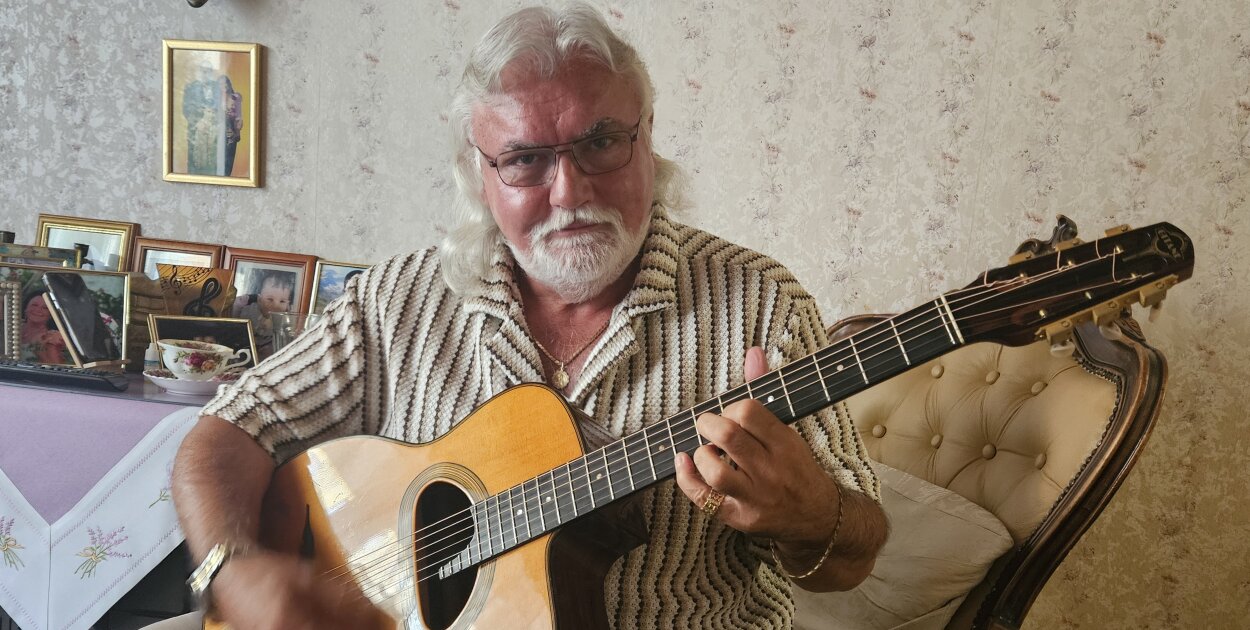
The well-known Roma musician Gejza Horváth can tell you at length how they celebrated Christmas. He was born in 1948 in Písečná in the Šumpersk region, but spent his childhood in the settlement of Kolinovce near the Slovak town of Krompachy. He comes from a musical family and was already playing with the biggest bands in Slovakia at the age of twelve. So he was definitely not bored at Christmas. In Gejza Horváth’s childhood, Roma would go around the village to play carols for the gádže

rroma.org
en_GBEN