Tag Archives: Protest

Reaction to Newsweek Article in Poland

Published by:

Reaction to Newsweek Article in Poland

Several Roma  organisations reacted to the artcile about Roma in pland published by Newsweek. The full text sates:

Subject: Letter to the editor – regarding the article “How do Romani women live in Poland?” (Newsweek,

7.02.2026)

Dear Editors,

Dear Author,

We are referring to the article published on February 7, 2026, on the Newsweek.pl website, “How do Romani women live in Poland? I went to their village. Fifteen is a good age for having children,” by Elżbieta Turlej (https://www.newsweek.pl/polska/spoleczenstwo/jak-zyja-romskie-kobiety-w-polsce-pojechalam-to-sprawdzic-do-wsi-maszkowice/kf443xc ). We believe that this article fits into the well-known and frequently criticized way of talking about Roma people in the Polish media, which leads to the stigmatization of Roma communities in Poland. Despite its reportage style and declared sensitivity, the publication does not offer a new perspective or in-depth reflection, but reproduces established interpretive patterns. The title and lead alone are sensational and simplistic, reducing the experiences of Roma women to a catchy, stigmatizing, and stereotypical image.

The text then revolves around the gesture of entering the world of the Other, understood as a journey to the Roma settlement in Maszkowice, the observation and selection of stories, with the author remaining the primary interpretative authority. This method of constructing the narrative should be explicitly called a form of epistemic violence. Knowledge about Roma women is produced over their heads, without real control over how their experiences are framed, hierarchized, and evaluated.

Roma women appear as protagonists of the story, but not as subjects co-creating its meaning. Their voices are filtered, organized, and instrumentalized in such a way as to confirm a preconceived narrative of tradition, oppression, and imprisonment between worlds. Selective empathy, focused on the most dramatic and intimate fragments of biography, leads to the fetishization of suffering rather than a thorough analysis of the social, institutional, and political conditions of these experiences.

The logic of contrast is particularly problematic. On the one hand, the settlement and tradition are presented as spaces of oppression and cultural confinement, while on the other, individual women’s stories are constructed as exceptions or evidence of the possibility of change. This narrative reinforces the hierarchical division between the imprisoned and the more modern, shifting the responsibility for change to individuals rather than to the structural mechanisms of exclusion, discrimination, and unequal access to public services.

Although the text appears critical, its language remains paternalistic and devoid of self-reflection. It lacks consideration of the power relations inherent in the act of reporting itself and the social consequences of perpetuating such images of Roma people in public debate.

We want to emphasize that such narratives have an impact on institutional practice.

Simplified and sensationalized images of Roma communities often translate into administrative decisions and the design of public policies and support programs based on stereotypes, control, and cultural correction, rather than on equal rights and state responsibility.
Roma Protests

Published by:

Roma Protests

The former Roma councilor Zoran Grm was informed by the Vtani, Roma Child association that there will be no protest rally against the Šutare Act as the municipality denied them the authorisation. He is already planning the next steps.

As the protest rally, which was planned for Tuesday, February 10, was canceled or postponed. Grm, in cooperation with the association, was one of the main representatives of the Roma community, which wanted to further inform the public about the consequences of the Šutare Act. “I plan to organize a meeting of Roma, including from Kočevje, Ribnica, Grosuplje, Krško, Brežice and Črnomelj,” announced Zoran Grm.

Slovenia: Roma Protest

Published by:

Slovenia: Roma Protest

The planned protest of Roma in Novo Mesto, Slovenia, which should have taken place on Tuesday February 10th, had to be cahcenlled. The reason: The municipality did not give the authoriusation. They claimed the application was incomplete.

Cleaning Toilets

Published by:

Cleaning Toilets

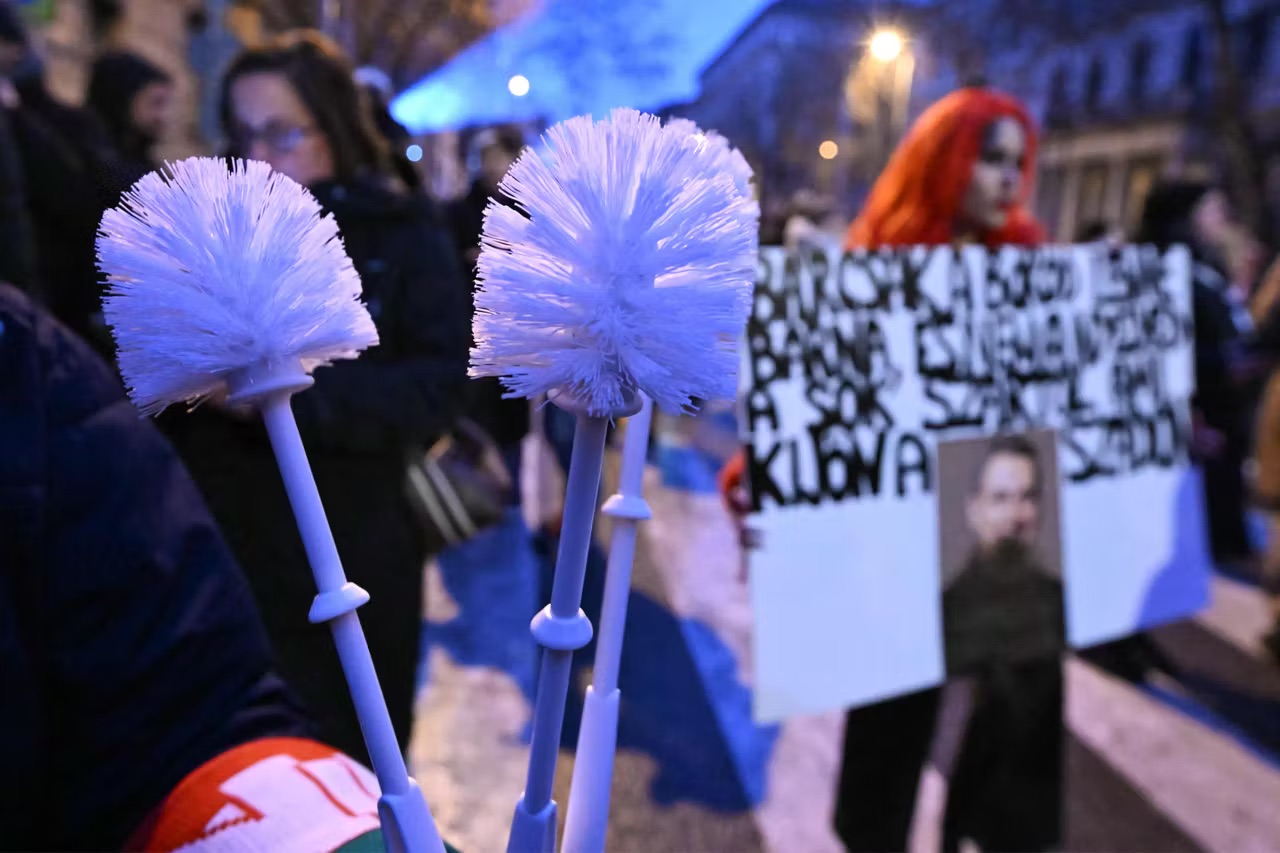
An article in the French press about the remarks of the Hungarian Minister of Construction and Transports, Janos Lazar, who said tht Roma should clean the shitty train toilets.

Meanwhile, a toilet brush has become the symbol of protest in  Hungary.

Driving Licenses …

Published by:

Driving Licenses …

A policeman arrested a young Rom driving without a valdi drivers’ license. Then it is found that the policeman didn’t have one either.

Now there are apparently protests in Macedonia, mostly from the Roma community, asking for being allowed to drive without a license. Soounds really weird and needs to be cross checked.

Counter-Protest in Novo Mesto

Published by:

Counter-Protest in Novo Mesto

A pre-election confrontation on Roma issues could occur in Novo Mesto.

Silvo Mesojedec announced sharply: “Enough excuses: Who dares to come to Novo Mesto?”

He sent an invitation to all the presidents of parliamentary parties to a pre-election confrontation on Roma issues.

“The residents of Southeast Slovenia know that security is tested every day. For decades, we have been listening to promises from Ljubljana, while problems on the ground are only accumulating. Now, before the elections, we demand answers,” announced Silvo Mesojedec, coordinator of the People’s Initiative Dolenjska. According to him, the invitation was received by Robert Golob, Janez Janša, Jernej Vrtovec, Matjaž Han, Asta Vrečko and Anže Logar.

Roma Protests in Novo Mesto

Published by:

Roma Protests in Novo Mesto

The association Vstani Romaski otrok is announcing a rally for Tuesday afternoon at Glavni trg in Novo mesto, with which they will express their disagreement with the social welfare confiscations based on the Šutar Act. They expect between 100 and 300 Roma, who will also present the hardships that some of them have found themselves in due to the aforementioned foreclosures, the president of the association Matej Domijan told STA.

It is not sure they will get an athorisation. The municipality rejected the firstr submission stating that documents were missung, and the association resubmitted the request.

Slovenia: Protest

Published by:

Slovenia: Protest

Roma organisations were planning a protest today in Novo Mesto against the Šutar Act and its implementation which has by now deprived people of all means of existence.

It was not sure in the press whether wthe protest would be allowed, so let’s see what is reported tomorrow.

Budapest: Protest

Published by:

Budapest: Protest

More than 1’000 people  among which many Roma, protested on Saturday against the racist comments of the construction and Transport Minister Janos Lazar, requisquing his dismissal. He had said in a meeting that Roma should clean shitty train toilets.

Letter to Minister

Published by:

Letter to Minister

Neighbours of a Roma settlement wrote to the Slovene Minister Luka Mesec. They said: “In the village community of Mihovica (Šentjernej municipality), we are following your visits to Roma settlements in Slovenia and your statements about constitutional rights. Meanwhile, we are dealing with a much more basic question every day – how to survive with approximately 100 residents of Roma settlements, whose behaviour represents a serious security threat to our community.”

Slovenia: Manifestation

Published by:

Slovenia: Manifestation

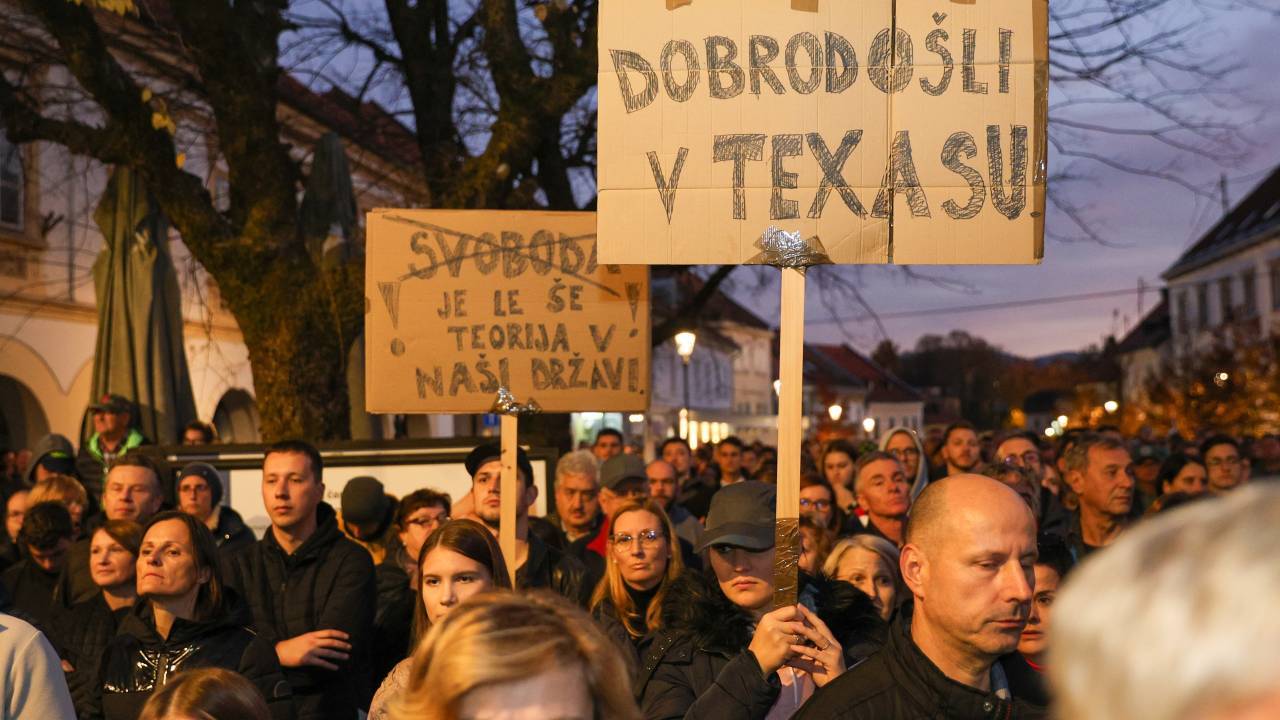
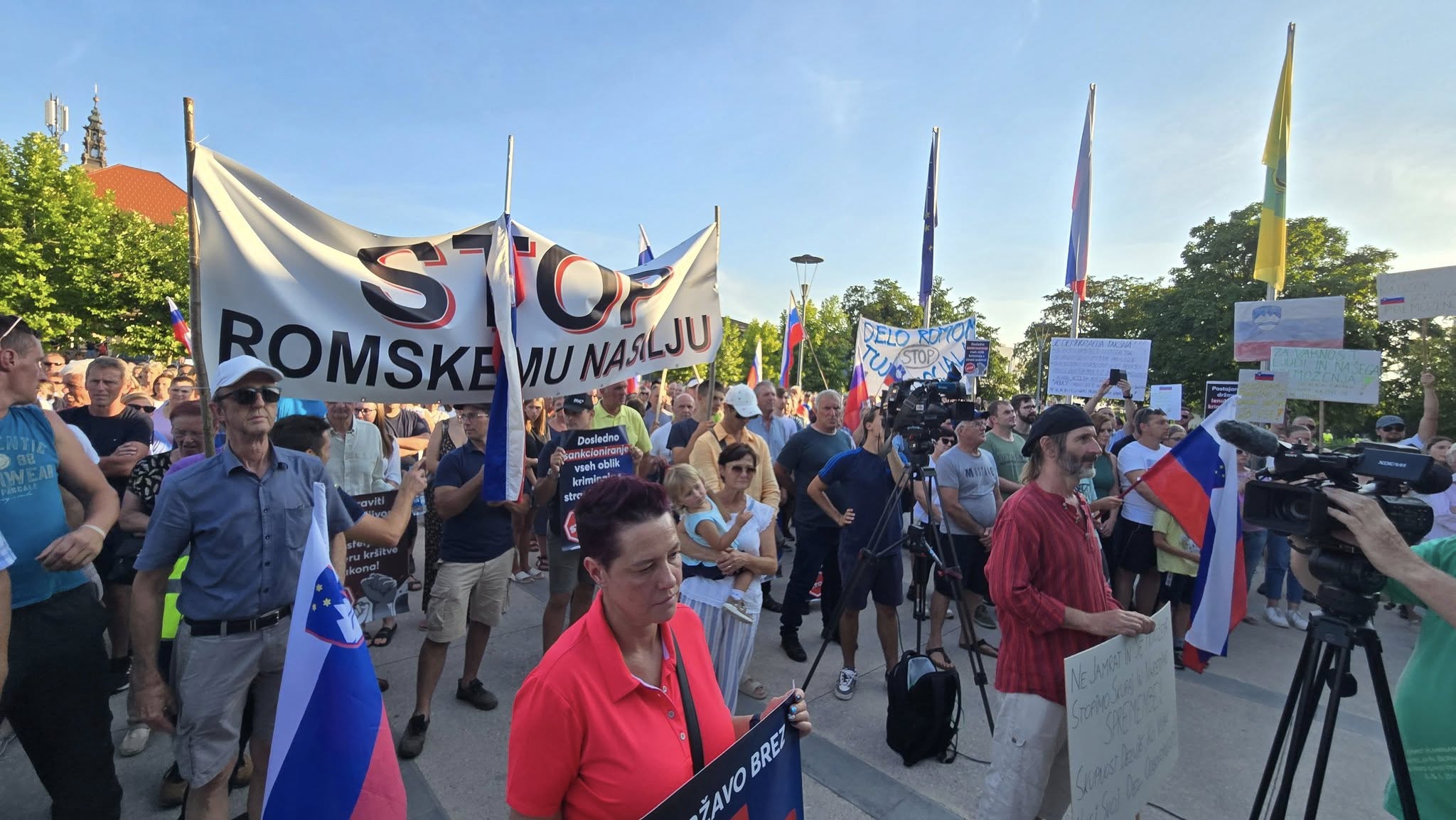
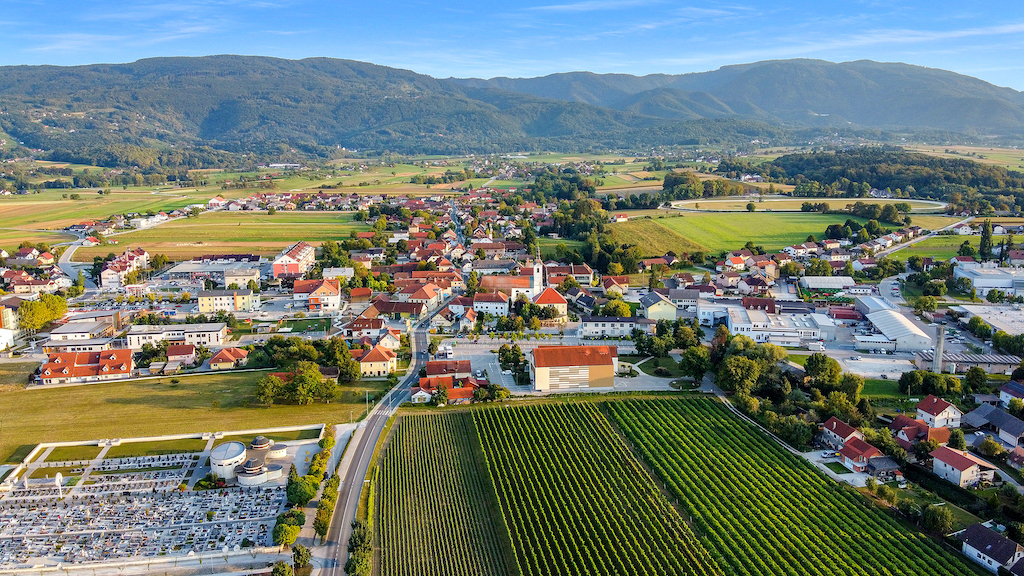
In Šentjernej, Slovenia, roughly a thousand people manifested and protested against what they see as the state inaction on Roma violence. They made several demands on the government, including ensuring security and adopting appropriate legislation. They set a deadline of mid-September, otherwise the demands will be escalated. It is time for us to be heard and taken into account, they announced.

Planned Protests

Published by:

Planned Protests

in Šentjernej in Slovenia, where, according to media “the Roma issue has reached its peak”, a protest rally will be held on Tuesday, July 15, at 7 p.m., organized by the local Šentjernej People’s Initiative. The reason for it is the increasingly frequent violent events in the municipality and the fact that state authorities are not taking action. The fundamental rights of citizens, such as security, public order and peace, equality before the law and social justice, are at risk.

Slovakia: Protest

Published by:

Slovakia: Protest

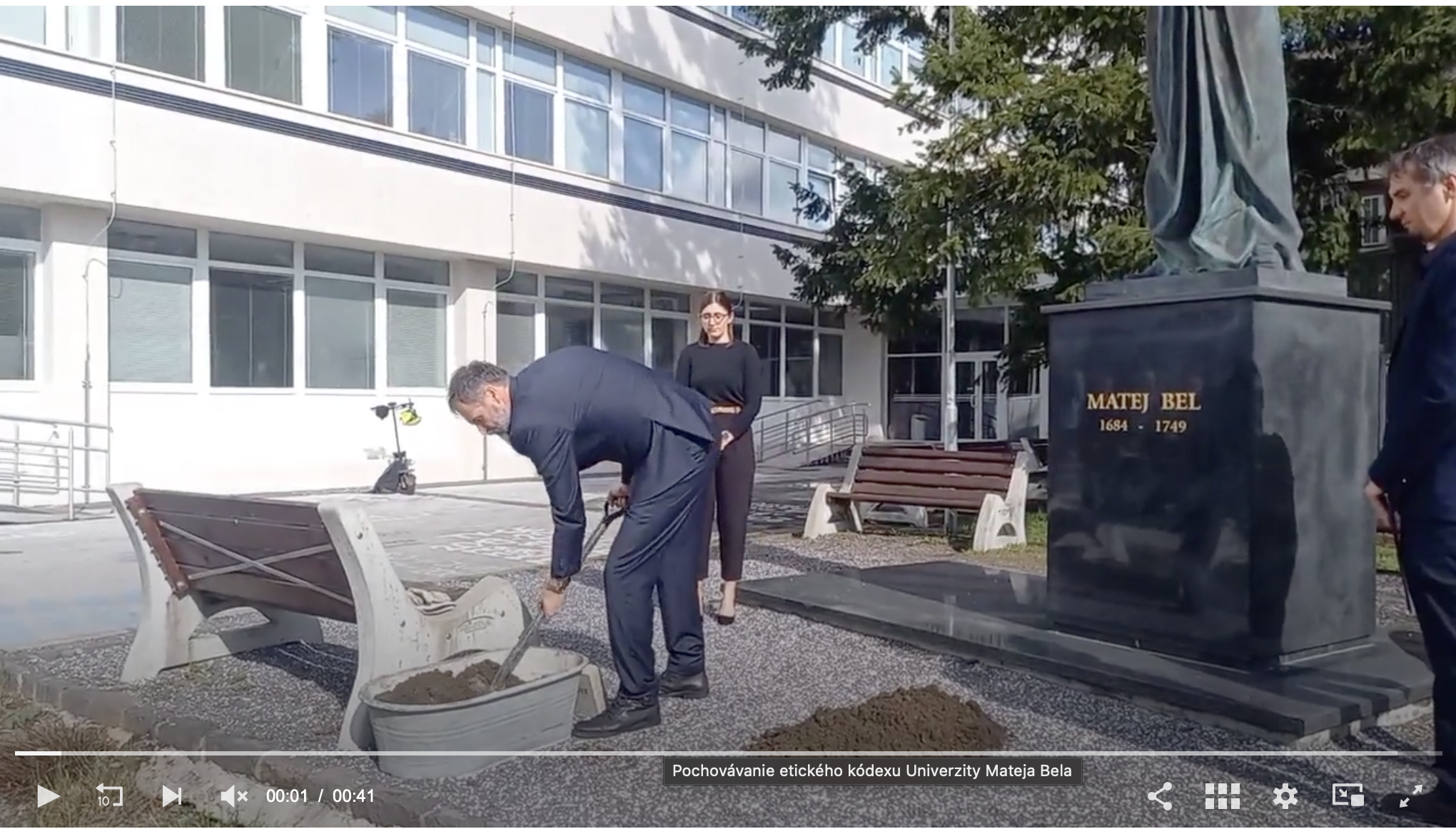
Teachers and students of Matej Bel University symbolically buried the code of ethics in protest against the speech of MEP Milan Mazurek at the university. “Dear mourners, on Thursday, March 20, the spirit of the code of ethics of Matej Bel University died.

Milan Mazurek, of the Republic Party (formerly “Our Slovakia”) is an extreme right politician who was condemned for racism against Roma in 2018, a decision upheld by the supreme court in 2019. Hew said in a speech: “The Gypsy anti-socials have never done anything for the nation and never will”.

Bulgaria: Protests

Published by:

Bulgaria: Protests

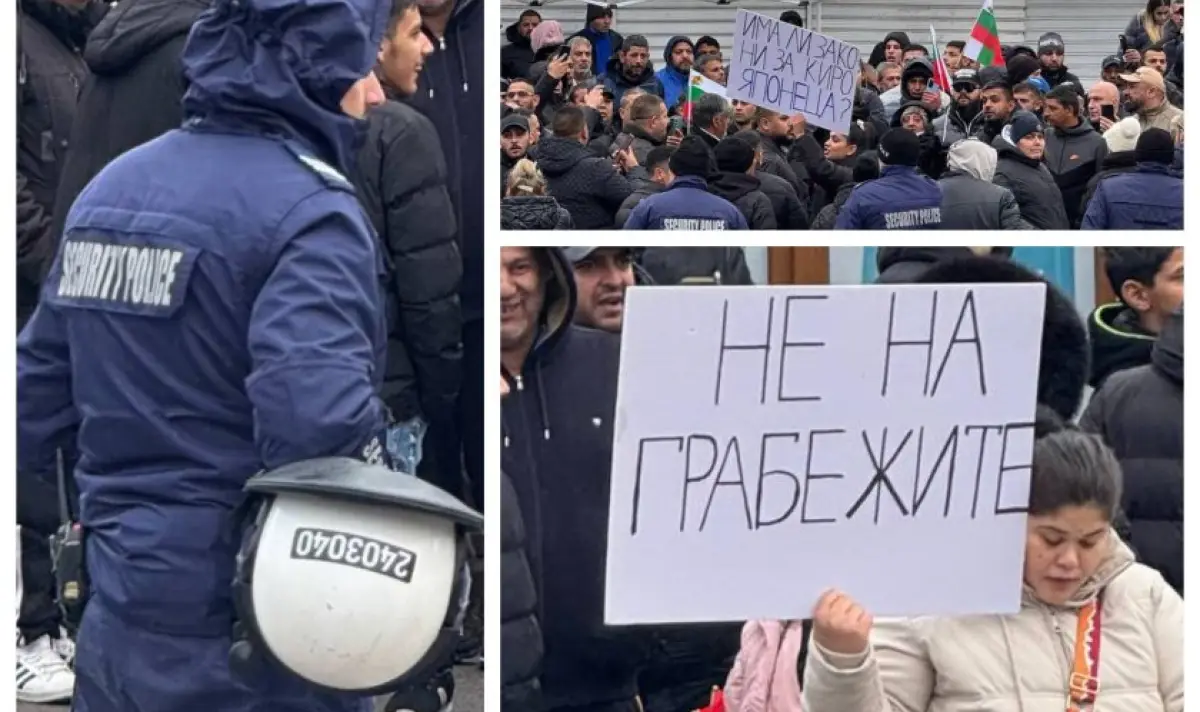
Residents of the Roam neighbourhood of Fakulteta in Sofia have been protesting against Kiril Kirov – known as Kiro the Japanese. The protestes claim that for years Kirov and his family have been harassing the residents of the neighbourhood, extorting them and forcing them to leave their homes, even to emigrate abroad. According to the protesters, the Japanese’s associates were distributing drugs in the neighbourhood, beating and even raping women.

Slovenia: Protests

Published by:

A protest will be held in the Slovene town of Škocjan on Thursday. The reason for the protest is the inaction of the current government regarding Roma crime.

According to th paper, the Roma “problem” in south-eastern Slovenia has reached its lowest point in the period of independent Slovenia, say representatives of civil initiatives. Despite numerous appeals from the desperate population, the authorities, which can adopt solutions and measures, do not respond. That is why the protest will take place.

Slovenia and Roma Protests

Published by:

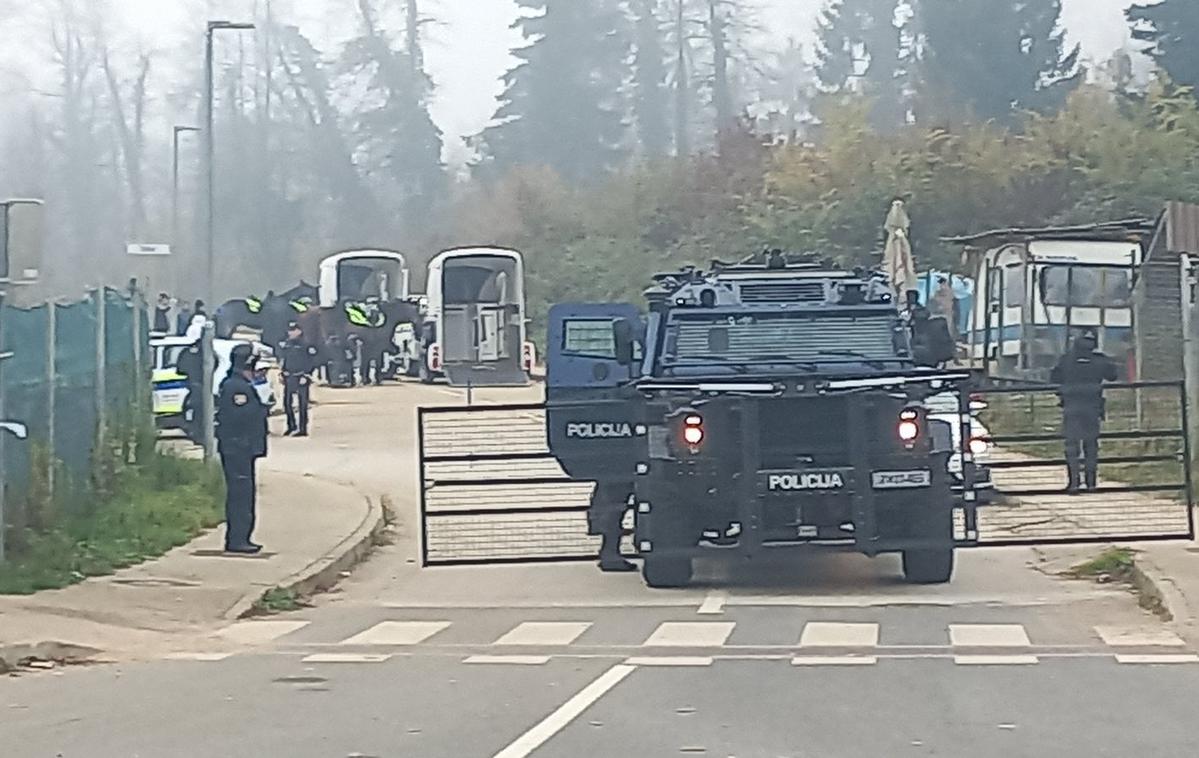
Last week in Kočevje, several Roma got into a fight with the police. According to the newspaper, this event was just the tip of the iceberg. Shootings, thefts and robberies are a regular occurrence. In this municipality, Roma have been holding a regular yearly protest to highlight their housing plight. This year, Roma cancelled it.

Slovenia and Roma

Published by:

Roma families protests in front of the Ribnič municipality began more than fifteen years ago, and their demands have always been the same, namely that the local authority should solve their housing problems.

The Union of Roma of Slovenia is now trying to calm the strained relations between the local authorities and the local Roma. Their representatives visited two Roma settlements in Ribnica yesterday and advised the local residents not to intensify their protest. They suggested that they first establish a dialogue with the mayor, with whom they had already agreed on a joint meeting.

Brno Protests

Published by:

On the one hand, indignation over Friday’s verdict of the Brno Regional Court, which acquitted Ukrainians in the case of the death of a young Roma at the Brno Reservoir, on the other hand, disappointment over the low turnout. This is what the demonstration looked like, where about five dozen Roma gathered in front of the Brno courthouse on Sunday afternoon.

rroma.org
en_GBEN