Category Archives: News Eastern Europe

Housing in Slovakia

Published by:

Housing in Slovakia

We take care of our Roma because they are decent people. They want to work and live at a high standard, says the mayor of Buzica in the Košice-okolie district, Jozef Mohňanský (SMK), about a project to improve the quality of housing for the Roma community.

Buzica is one of 13 municipalities that received a non-refundable financial contribution from the Office of the Government Plenipotentiary for Roma Communities.

The money is to be used for the reconstruction and construction of rental apartments worth a total of more than 26 million euros. This will create or reconstruct housing capacities for 1,193 people.

Nice, but not sustainable … It means over 20’000 euros per relodged person, this in a region where the house prices are often lower than that.

Interview

Published by:

Interview

Education, community projects, consulting, activism, writing and support for Romani culture and identity. All of this belongs to the world of Janka Plešková, a native of Slovakia, a student at the Faculty of Arts at Charles University.

“As far as I can remember, I have always lived in two worlds, Romani and non-Romani. And I searched for myself for a very long time, I did not know where I belonged.”

Tasja Award

Published by:

Tasja Award

The Tajsa Prize, which is awarded annually by the European Roma Institute for Arts and Culture (ERIAC) to outstanding Roma cultural figures, was awarded in Bucharest. This year’s award went to visual artist Selma Selman. The ceremony took place in the representative building of the Romanian Athenaeum, attended by distinguished guests, including the first ever Roma Romanian government minister, Petre-Florin Manole.

Serbia, Journalists, and Roma

Published by:

Serbia, Journalists, and Roma

In light of recent developments in media, when it comes to insulting and belittling the Roma community, journalists and Roma activists in Serbia have initiated a meeting that would open a space for discussion with the most important institutions. The idea is to jointly review the current situation and find effective mechanisms for responding to the increasingly frequent cases of hate speech and discrimination.

Roma Theatre

Published by:

Roma Theatre

The writer and journalist Luka Šteković, recently wrote “Theatre of the Valjevo Roma – The First Roma Theatre in the World”, published in the Great National Calendar for 2004 – Kolubara, edited by journalists Zoran Joksimović and Zdravko Ranković.

Luka Šteković’s text reveals the fascinating story of the Valjevo Roma Youth and its president, Čedomir Čedo Gračanin (1892–1956), a versatile talent who was a playwright, director and leading actor.

Roma “Money”

Published by:

Roma “Money”

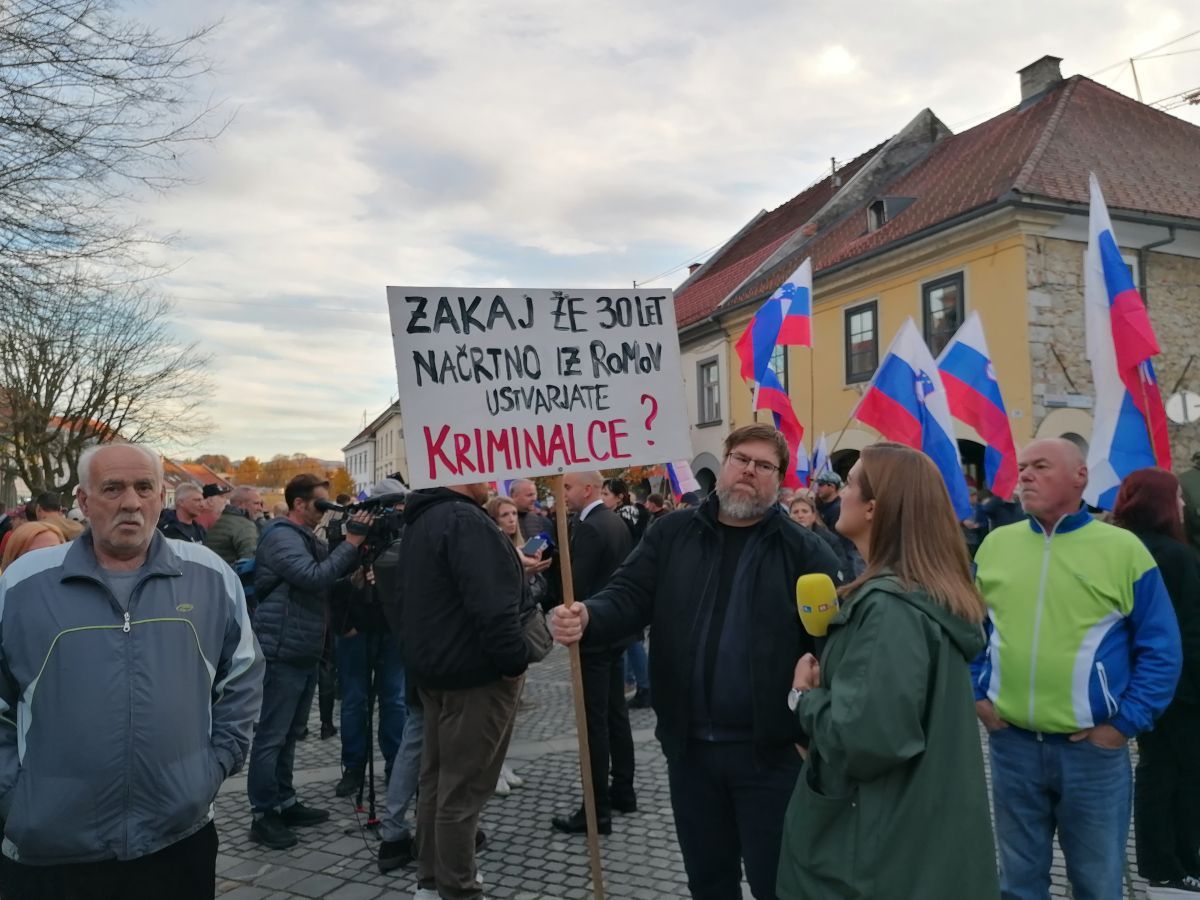
Slovenian spends around 20 million euros per year on Roma integration. Ther are officially around 10’000 Roma in the country. But, the journalist and president of the Roma Academic Club Sandi Horvat recently said in an interview that very few so-called of Roma money actually reaches Roma.

School and “Migrants”

Published by:

School and “Migrants”

Apparently, in the Maribor region of Slovenia, people are moving their children towards schools with less migrant children. The numbers are telling a more differentiated story: 9,400 students this school year, with 1,325 children from abroad. Most come from Bosnia and Herzegovina (488), followed by students from Kosovo (326), Ukraine (196) and Serbia (100). Individual students also come from more distant countries, such as Burundi, Bangladesh, Estonia and Sierra Leone.

What is clearly racist though is the next topic: Roma…  “We have a lot of immigrant and Roma students,” explains Damjan Pihler, the principal of the Franceta Prešerna Elementary School. The number of Roma students in Maribor schools is around four percent and has not changed significantly in recent years. “This year, our school is attended by 27 Roma students and 30 children from abroad who are enrolled in a Slovenian school for the first time. We had the same number of immigrant students last year – that is, 60 children in two years whose mother tongue is not Slovenian.”

So basically, Roma from Slovenia are migrants …

Roma Media House

Published by:

Roma Media House

“The activity entitled ‘Creation and Functioning of the Roma Media House as a Means of Improving the Media Image of Roma’ was excluded from the action plan for the priority area of ​​combating anti-Roma racism and supporting participation, whose indicative budget for the years 2025-2026 was 20,000,000 euros,” the Government Office of the Slovak Republic, confirmed in the explanatory report to the plan.

Romanes Workshop

Published by:

Romanes Workshop

A day-long series of workshops called Phen oda romanes (Say it in Romanes) took place in Prague. The aim of the project is to support the development of written Romani and to connect novice and experienced authors, journalists, translators and students of Romani studies from both the Roma and the majority society.

Czechia: Choir

Published by:

Czechia: Choir

More than three dozen Roma children from Ostrava have had their first rehearsal of a new choir. This is the only regional branch of the well-known choir Čhavorenge under the direction of singer and choirmaster Ida Kelarová. They will rehearse regularly and hope that it will change their lives.

Slovenia and Roma

Published by:

Slovenia and Roma

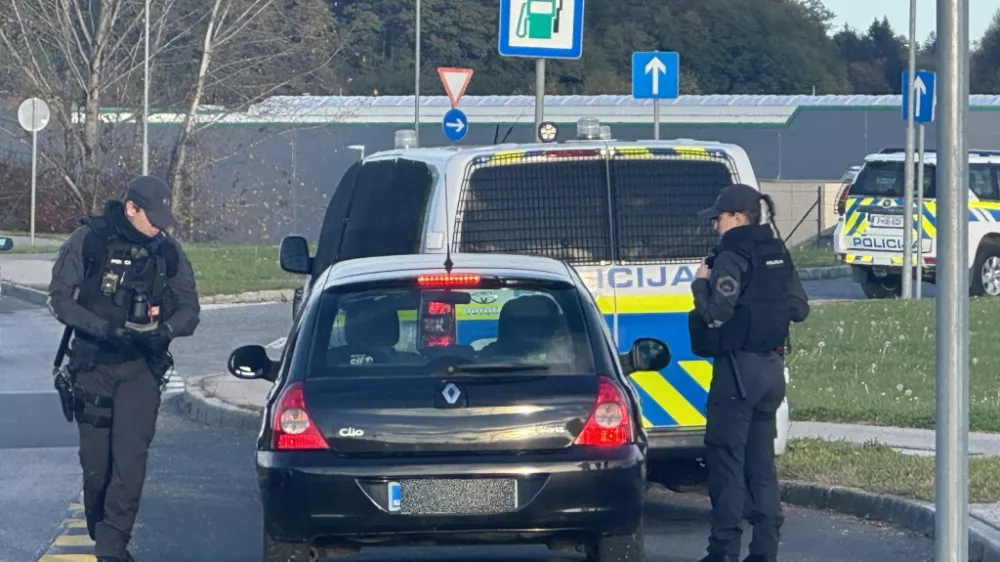
A discussion with Mensur Haliti, Vice President of the Roma Foundation for Europe, about Slovenia’s response to the killing in Novo mesto and about Šutar’s law, which has sparked heated debates about Roma, security and democracy across Europe. Haliti, one of the key voices for the political empowerment of Roma in Europe, warns that the security law opens up dangerous patterns and goes beyond just the Roma issue.

Novo Mesto: Interview

Published by:

Novo Mesto: Interview

An interview with Kevin Tudija, a young Roma from Bela Krajina. the 22-year-old is a gastronomic technician by profession. As he couldn’t get a job in Bela Krajina, he accepted an offer to work in Primorska. He worked there for two seasons, and now he’s returning to Metlika, where he will work with Roma children in a multi-purpose centre. He wants to set an example for them that with work and perseverance, they can finish school, continue their education in high school, and find a job.

He speaks about what it means to be a Rom, especially after the killing in Novo Mesto.

Are you Rom?

Published by:

Are you Rom?

An interview with Nikolas Ferenc, a 26-year-old Roma actor, voice actor and musician. On the social network Instagram, he creates videos about Roma culture, stereotypes and prejudices that Roma men and women encounter.

When early in his career he was asked whether he was Rom, he then did not say yes.

Slovakia and the Roma Action Plan

Published by:

Slovakia and the Roma Action Plan

The Roma media house will probably not be implemented in the near future. The project, which was part of the action plans for the Strategy for Equality, Inclusion and Participation of Roma by 2030 for the years 2025-2027, does not appear in the draft of the updated document. The changes in the action plans are currently the subject of a comment procedure.

The new plan doesn’t focus on anti-Roma racism but on employment and integration. How will this work?

Croatian Revisionism

Published by:

Croatian Revisionism

Last month, a roundtable was held in the Croatian parliament on the Jasenovac camp which was organized by the DOMiNO and Croatian Sovereigns parties. It was attended by historical revisionists Igor Vukić and Nikola Banić, as well as of Milorad Pupovac (SDSS).

“According to credible sources, Jasenovac was not a death camp, during the roundtable. He and his interlocutors denied the official number of victims cited by the Jasenovac Memorial Site Public Institution (JUSP) citing 83,145 people killed there, among which more than 20’000 children. According to these revisionists, there were only children from neighbouring regions attending vocational schools.

The question arises as to who allowed revisionists and deniers of the crimes in Jasenovac to hold a debate and how is it possible that for denying the Holocaust in other European Union countries you end up in prison, but in Croatia you get a hall in the Croatian Parliament.

Šutar Law

Published by:

Šutar Law

Three articles in French about the newly voted Šutar law in Slovenia. The Slovenian parliament passed this controversial law in the early hours of Tuesday morning. The law was adopted in a rapid succession, just twelve days after being proposed by the government. Those who voted in favour of the “Šutar Law” see it as essential measures to improve security in Slovenia. However, critics of the law denounce unconstitutional provisions and the risk of equating an entire minority with a security threat.

Slovakia and Roma Settlements

Published by:

Slovakia and Roma Settlements

The Office of the Government Plenipotentiary of the Slovak Republic for Roma Communities has approved another series of projects aimed at improving living conditions in municipalities included in the Atlas of Roma Communities. Thanks to the approved projects, social rental housing capacity for 1,193 people will be created, 8.15 kilometres of sewage will be built or reconstructed, and waste will be removed from an area of ​​almost 3,200 square meters.

This is a very small drop in a very large ocean.

Croatia: Integration

Published by:

Croatia: Integration

Međimurje County invited citizens to vote online to support the story of the Međimurje Sports Network about Vjeran Balog from Parag, which has entered the competition for the best journalistic work on the topic of inclusion and tolerance in the community.

The story follows Vjeran Balog, a football coach dedicated to working with young people, who last week became the first Roma to hold a coaching diploma from the Croatian Football Federation (HNS). His example shows how motivation and focus can overcome great obstacles.

rroma.org
en_GBEN