Category Archives: Serbia

The Ivanovitch

Published by:

The Ivanovitch

This article speaks about the Ivanovitch (in its French spelling, originally Ivanović), a Roma family from the Vojvodina who emigrated to France and became famous there. The father, Jarko, is credited with the composition of the Roma hymn “Djelem Djelem”. His two sons, Slobodan and Petro were famous musicians under the name “Les Tziganes Ivanovitch”. Petro married Natacha Bielenberg, a Russian Romni whose mother, Raja was a famous dancer in the Theatre Romen in Moscow.

Football and Roma

Published by:

Football and Roma

Two articles in the Serbian press about Roma footballers.  The articles highlight the significant contributions of Roma players in the history of the FIFA World Cup, mentioning legends like Hristo Stoichkov, Gheorghe Hagi, and Ricardo Quaresma.

They emphasise the achievements of these players, including Stoichkov’s pivotal role in Bulgaria’s fourth-place finish in 1994 and Quaresma’s pride in his Romani heritage.

The piece calls attention to the ongoing underrepresentation of Romani players in contemporary football, despite their historical impact on the sport.

Roma and Religion

Published by:

Roma and Religion

A new scientific study by sociologist Dragan Todorović explores the religious identity of Roma in Serbia, focusing on the growth of Protestant communities among them.

The study highlights the impact of religious changes on the daily lives, education, family relations, and social integration of the Roma community, particularly in southern Serbia.

Participants in the book promotion emphasized the importance of understanding the relationship between religion and social development to improve public policies for the vulnerable Roma community.

Roma History

Published by:

Roma History

Višnja Višnjić Milić won an award for her ethical reporting on Roma history and Holocaust remembrance, focusing on the suffering of Roma during World War II.

Her program “Građanin” highlighted the experiences of Roma in two concentration camps, showcasing journalistic integrity and high ethical standards. Milić emphasized the importance of creating understanding and dialogue about marginalized communities, viewing the award as motivation to continue her work against discrimination.

Unemployment in Serbia

Published by:

Unemployment in Serbia

Roma face high unemployment and discrimination, often leading them to work in the informal economy with low-paying jobs.

Marko, a 25-year-old from Kraljevo, struggled for three years to find a job after completing his hospitality education, facing consistent rejection due to prejudices against Roma. His experience reflects a broader issue in Serbia, where many Roma encounter similar barriers in the job market.

The articles discuss the broader challenges faced by Roma, including high unemployment rates, lack of access to education and healthcare, and the prevalence of working in the informal economy.

The BBC one emphasizes the need for targeted support and educational opportunities to improve the employment prospects of Roma, particularly women, who face additional discrimination and economic dependency.

Hungary and Roma

Published by:

Hungary and Roma

Under the new leadership of Prime Minister Peter Mađar, Hungary is taking significant steps to address discrimination against the Roma community, marking a historic moment in the country’s political landscape.

The new government includes four Roma parliament members, with Krištijan Kesegi becoming the first Roma vice president, signaling a shift towards greater representation.

Despite the positive gestures, Roma leaders remain cautious and are waiting to see if these symbolic changes will lead to real policy reforms and improvements in their socio-economic conditions.

However, Aba-Horváth István, a Roma minority spokesperson in Hungary, expresses disappointment over the loss of prestige in parliamentary representation for the Roma community, feeling they missed a historic opportunity for a genuine voice in parliament.

He criticizes the lack of cooperation from Debrecen representatives and the prevailing divisive political culture, which he believes undermines collaboration and community building.

Work in Serbia

Published by:

Work in Serbia

The event “Days of Roma Careers” was held in Bor to improve employment opportunities for Roma and Romnja, focusing on self-employment and job training. It gathered representatives from institutions, civil society organizations, and the Roma community to discuss employment support programs and challenges faced by Roma in education and the labor market.

The project aims to enhance the social status of Roma through active employment inclusion, particularly targeting unemployed youth and vulnerable groups such as Romani women and persons with disabilities.

Roma Inclusion

Published by:

Roma Inclusion

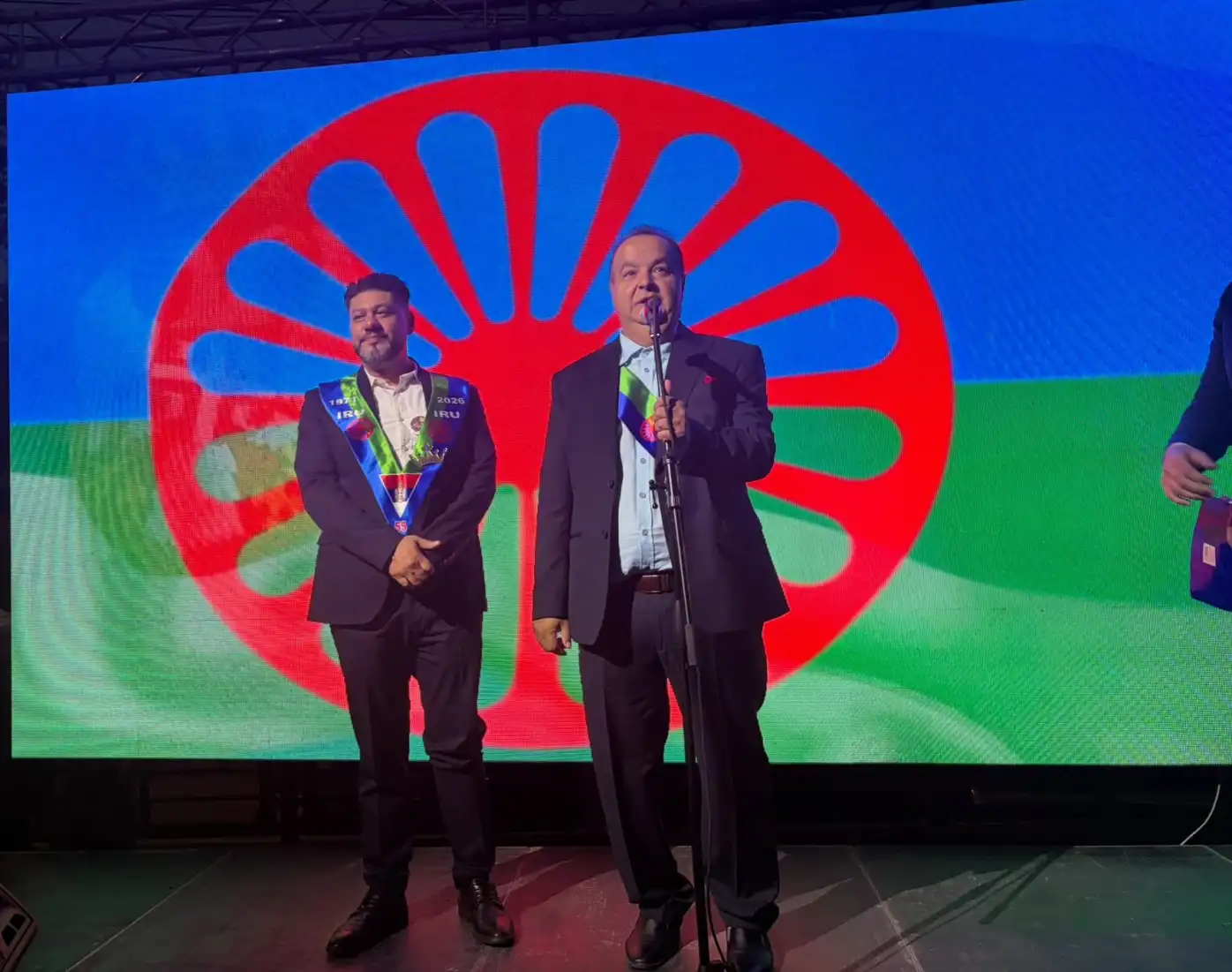
A ceremony was held to celebrate the 20th anniversary of the Office for the Inclusion of Roma, which has worked to improve the position of the Roma community in Vojvodina for two decades. Key achievements over the past twenty years include better integration of Roma into society, increased access to education, employment, healthcare, and improved living conditions.

Officials emphasized the importance of continued support for the Roma community through various programs aimed at education, economic empowerment, and strengthening institutional support.

Roma Minority in Serbia

Published by:

Roma Minority in Serbia

Roma are officially the third largest minority in Serbia, yet they face significant challenges in their daily lives.

In recent decades, there has been a gradual improvement in their social standing, with efforts to move away from marginalization.

Young graphic designer Veselj Saliji exemplifies this progress through his award-winning work, showcasing the potential and talent within the Roma community.

Young Roma in Serbia

Published by:

Young Roma in Serbia

Salih Saitović, president of the Democratic Union of Roma, discussed the challenges faced by young Roma in Vranje, emphasizing the lack of equal opportunities rather than a lack of will or potential among the youth.

UNDP, World Bank, and European Commission data reveal that only 27% of young Roma aged 18-24 are engaged in education, employment, or training, compared to 58% of their non-Roma peers, with young Romnja facing even greater challenges.

Saitović calls for increased investment in education, training programs, and employment support for young Roma, stressing the importance of providing equal opportunities to prevent losing a generation of potential contributors to society.

Hate Speech in Serbia

Published by:

Hate Speech in Serbia

Srđan Šajn, president of the Roma Party, condemned a graffiti in Obrovac that read “Roms, be afraid,” calling it an open incitement of hate and discrimination against the Roma community. He criticized Roma officials from the ruling Serbian Progressive Party for using the incident for political propaganda instead of condemning hate speech and protecting Roma interests.

Šajn highlighted the government’s weak response to anti-Roma incidents, suggesting that the graffiti reflects a broader atmosphere of intolerance and extremism fostered by the authorities and their allies in the media.

Slobodan Lala Berberski

Published by:

Slobodan Lala Berberski

A festival is now celebrating him. Slobodan Lala Berberski was born on October 20, 1919 in Bečkerek, today’s Zrenjanin, where he completed elementary and high school. He began studying law, but as a member of the Communist Youth League of Yugoslavia, he was arrested in 1941. In 1941, he joined the People’s Liberation War of the people of Yugoslavia. He was a Romani writer and the first president of the World Roma Organization bweing elected as the first president of the World Roma Organization in the famous 1971 london meeting.

Reactions to the Roma “Thieves”

Published by:

Reactions to the Roma “Thieves”

Following the statements of the editor of the Serbian TV and paper “Informer”, Dragan J. Vučićević, who stated that trains stopped on Saturday because “Roma blockaders” stole copper cables, Roma representatives reacted.

The Democratic Union of Roma Strongly Condemns the Shameful and Offensive Statements Linking the Roma People to Crime and Copper Theft, Made in Public by Dragan J. Vučićević and Media Under His Control.

The President of the Democratic Union of Roma, Salih Saitović, stated that it is unacceptable that in the 21st century, an entire people is collectively insulted, humiliated and targeted for the sake of political showdowns and raising tensions in society.

The Roma Party has demanded an investigation into the responsibility of Informer TV editor Dragan J. Vučićević for hate speech and announced that, if no one reacts, it will internationalize the Roma issue in Serbia.

Roma “Thieves”

Published by:

Roma “Thieves”

The editor of the Serbian TV and paper “Informer”, Dragan J. Vučićević, stated that trains stopped on Saturday because “Roma blockaders” stole copper cables created a few heated reactions. Roma representatives were aghast (see our other post).

But the Serbian Information Minister Boris Bratina is defending Dragan J. Vučićević and Informer, a paper that was banned two days ago in Montenegro for promoting hate speech and denying the national identity of Montenegrins.

Žarko Jovanović – musician and Roma activist

Published by:

Žarko Jovanović – musician and Roma activist

In the weekly Sveta Roma, they talk about Žarko Jovanović Jagdin – a Roma musician, composer and activist who left his mark on the history of the Roma.

May he rest in peace.

Romanes in Serbia

Published by:

Romanes in Serbia

Teaching Romanes with cultural elements is one of the key mechanisms for preserving the identity of the Roma community in Serbia, but also an important instrument for strengthening intercultural dialogue and tolerance in modern society. Through the educational system, this subject goes beyond the framework of mere language acquisition and becomes a space in which students develop awareness of their own origins, history and cultural heritage.

Tambura

Published by:

Tambura

In Slankame, Serbia, Bratislava Braco Nikolić created and leads his tambura orchestra, which has become the trademark of this place.

In just three years, Braca has managed to bring together children of different ages, and help them gain a beautiful experience of orchestral music making, which, he says, is an illustration of life – everyone strives for individual improvement, but when they combine knowledge and sensitivity, it becomes a new experience for everyone.

Romanes and Schools

Published by:

Romanes and Schools

A discussion was held in Belgrade about improving Romani language teaching, with a special focus on the position of teachers, greater student coverage and the need to introduce long-term, systemic solutions into the Serbian education system.

Lolita Cercel

Published by:

Lolita Cercel

Lolita Cercel, created virtually with the help of artificial intelligence, is a star in Romania and beyond. Her genre, “Balkan trip-hop”, combines traditional Roma melodies with modern pop, dance and electronic rhythms and has long since become part of the mainstream music scene. But, in addition to fame, she is also the target of critics. “The instrumentalization of Roma culture”, someone called her. According to critics, while real Roma artists are often underestimated, a “virtual, racially charged and dehumanized Roma identity” is suddenly gaining ground.

April 8th – Serbia

Published by:

April 8th – Serbia

Some of the activities and articles about April 8th in Serbia.

rroma.org
en_GBEN