Tag Archives: Education

Unseen

Published by:

Unseen

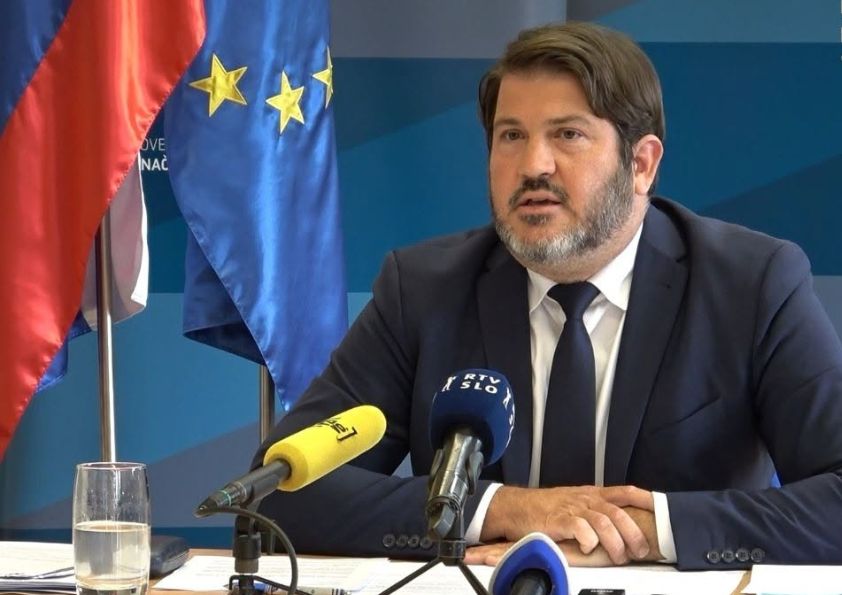
Miha Lobnik, Advocate of the Principle of Equality in Slovenia says about Roma that “To hide their roots, they prefer to choose Slovenian surnames”. He organised a roundtable discussion to highlight the problems in the education of Roma children.

Romani Pupils

Published by:

Romani Pupils

An article about Romani pupils in Polish schools. It says that for a Roma child, the threshold of school is often a threshold to a completely different linguistic world. In homes, especially in groups like Polska Roma, which cultivate a stronger tradition, the first language is Romani. It is an intimate, homely language, acting as a guardian of identity. At school, students must rapidly adapt to Polish grammatical structures to master reading and writing, which represents a tremendous cognitive effort.

Well most of them are bilingual… So not sure about that statement.

Education and Roma

Published by:

Education and Roma

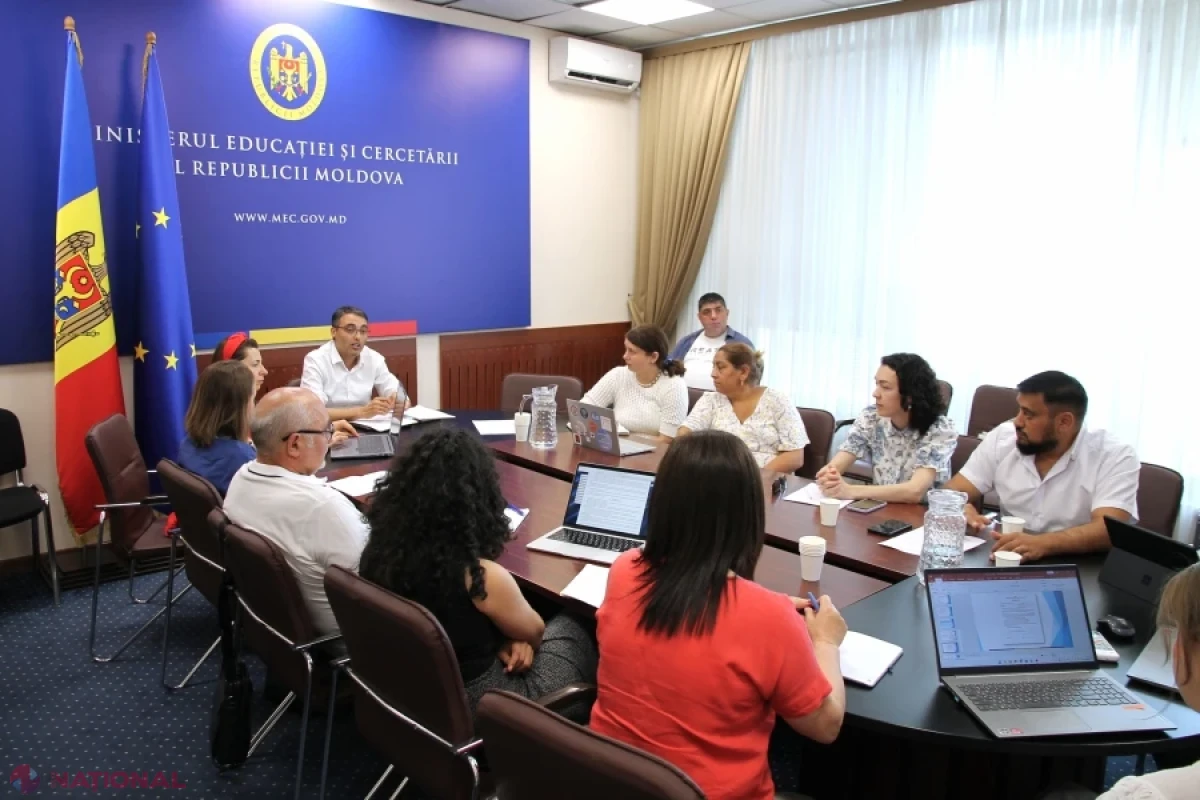
On Thursday, March 25, over 30 young Roma from across Moldova, members of the Young Roma Network of the Republic of Moldova, presented the “Young Roma Manifesto”—a document outlining clear educational priorities. These include ensuring equal access to quality education, supporting students from vulnerable backgrounds, and continuously developing educational policies tailored to the needs of Roma communities. Thousands of teachers participated in public discussions on the concept of school subjects. During the event, held at the Ministry of Education and Research, young people highlighted the positive impact of specialized educational programs, especially scholarships for academic achievement, intended for Roma students in lyceums, vocational schools, and universities.

Bulgarian Project

Published by:

Bulgarian Project

In the period 2023 – 2025, the Municipality of Lukovit implemented the project “Future for Children in the Municipality of Lukovit”, funded by the Human Resources Development Program 2021 -2027. As a result of the implementation of the projects, conclusions are drawn about the growing marginalization of certain places and neighbourhoods and the deepening challenges in terms of poverty and inequalities, including the lack of access to health, social, communal and other services for Roma groups. In the villages of Belentsi and Petrevene – a large percentage of Roma families with children, at risk of poverty, not speaking Bulgarian and for this reason – difficulties in the social and educational integration of children in kindergarten and school. In the village of Bezhanovo – a large number of families with eight to 10 children, in extreme poverty and at risk of marginalization. In the town of Lukovit – a compact Roma population in the “Iztok” district – according to expert observations, over five thousand people”, the report says.

  • Общинските съветници в Луковит одобриха всички предложения от дневния ред. In: Utro Ruse. 26.03.2026. https://utroruse.com/amp/?id=1226934

Education in the UK

Published by:

Education in the UK

A new study shows that Roma and travellers children in the Bradford area are severely disadvantaged and the lowest achievement rates.

Bad.

Good Practices

Published by:

Good Practices

Partners of the LeadEx project, co-financed by the European Regional Development Fund, participated in a study visit to Tallinn, Estonia, which took place from 9 to 11 March.

Project participants at a discussion. Slovenian representatives presented the Roma Assistant project as an example of good practice, which is being implemented at the Ministry of Education together with the Centre for School and Extracurricular Activities.

Whether this program is good practice or successful remains to be tested.

Education in Slovakia

Published by:

Education in Slovakia

According to educator and education expert Juraj Hipš, Slovak education system has long struggled with segregation, which has not only a racial but also a social dimension. He pointed out that it is not just schools where Roma children are concentrated, but also schools where children from socially disadvantaged families, from hostels or from generational poverty are concentrated. “We have a huge problem with segregation in Slovakia.” He recalled that according to data from the Ministry of Education, there are almost 500 schools in Slovakia that are segregated or at risk of segregation.

School Project

Published by:

School Project

Poverty and early marriages are among the main reasons why children from vulnerable groups (read minorities here, and of course especially Roma)do not attend school regularly, experts said at the opening of the project to retain students in the education system, held at the capital’s 51st Secondary School “Elisaveta Bagryana” under the slogan “Let’s bring their future back”.

Every Child has a Chance

Published by:

Every Child has a Chance

An open discussion will be held on the 17th of March in the Teologická fakulta, Jihočeská univerzita v ČB,  in České Budějovice. The discussion meeting is intended primarily for representatives of city administration, schools, kindergartens and the professional public. Together they will focus on current topics related to supporting children not only in education, sharing practice, experiences, opinions and opportunities for mutual cooperation. The aim of the meeting is to create a space for dialogue and inspiration for further steps towards quality and fair education for every child.

Schools and Roma

Published by:

Schools and Roma

At one of the larger primary schools in Dolenjska, Slovenia, 15 students are repeating a grade this year, all of them Roma children. The data was confirmed by the principal of the Kočevje Assembly of Delegates Primary School, Peter Pirc.

The principal explains that a large number of unsuccessful students appear almost every year, especially in the first and sixth grades. The first grade is particularly pronounced, where many children have problems right from the start of school.

Bulgaria, Education, and Roma

Published by:

Bulgaria, Education, and Roma

An article on “educational” cases against minors filed with the prosecutor in Slivengrad, Bulgaria in 2025. 29 children, all boys were invoilved in the cases. What is positive is that the number of cases involving Roma has significantly decreased from 2024.

Education and Roma in Ukraine

Published by:

Education and Roma in Ukraine

Roma are one of the most vulnerable national communities in Ukraine. Roma children experience discrimination from an early age – they are often not accepted into general kindergartens and schools, directing them to special “Roma” institutions. Such educational segregation is widespread in the Transcarpathian region. In that region, many Roma chilcren do not even go to school.

Racism in Schools

Published by:

Racism in Schools

Another article about racism against Roma in German schools. This time, the story of Melissa who felt excluded as the only Roma child in her class. Changing schools to a special school in Frankfurt enabled her to graduate.

Discrimination in Schools

Published by:

Discrimination in Schools

The Reporting Center for Antigypsyism (MIA) in Hesse has registered significantly more cases of discrimination against Sinti and Roma than in the previous year. Students are particularly affected – on the school grounds, but also during lessons.

Bad.

Roma, Travellers, and Universities

Published by:

Roma, Travellers, and Universities

According to recently published numbers, the number of “Gypsy or Travellers” enrolled in univeristies in the UK increased from 105 in 2019/2020 to 2’535 in 2023/2024. Apparently, the increase is mostly due to Roma students.

Arte: Reportage

Published by:

Arte: Reportage

In Hungary, 40% of Roma live below the poverty line. Young members of the community are particularly affected by school dropout rates. Faced with this situation, Ambedkar High School stands out as an island of resistance, exclusively accommodating Roma students. The story of this hope is first and foremost linked to one man: Tibor Derdak, the school’s headmaster.

Schools and Disadvantaged Students

Published by:

Schools and Disadvantaged Students

An article about the fact that there are gifted children among Roma … Clearly so, but not for everybody. Statistics and new studies show that there are thoughtful and bright children among them, but as a society we have great reserves in recognizing and supporting them.

“In segregated schools, talent is usually not talked about, and if it is, it is in the context of artistic or sports talent. Roma children are good at boxing, music and dance, but not at mathematics,” describes Karel Gargulák from the research company PAQ Research, how Czech society is used to thinking about certain groups of the population. “

Segregation is bad, just think of the USA …

Slovenia, Education, and Social Help

Published by:

Slovenia, Education, and Social Help

Although primary education is compulsory in Slovenia, some individuals do not complete it. The issue is particularly acute in the Roma community, as according to Amnesty International, more than 60% of Roma in Slovenia have not completed primary education. Among the initiatives to the government was a proposal that primary education would be mandatory if individuals wanted to draw on state forms of assistance and allowances and, in general, the benefits offered by the state.

But the Ministry of Labor, Family, Social Affairs and Equal Opportunities rejects the proposal. They explained (rightly so):

“The purpose of all forms of social assistance, supplements (child, care) and other benefits and subsidies is to ensure a basic level of social security for residents. The condition of being tied to education could constitute discrimination and a violation of the principle of equality before the law.”

Roma Students

Published by:

Roma Students

The best Roma students in primary and secondary schools in Čačak, Serbia, were awarded 10 laptops, of which seven elementary school students and three high school students were awarded towards the end of 2025.

rroma.org
en_GBEN