Tag Archives: Integration

Integration

Published by:

Integration

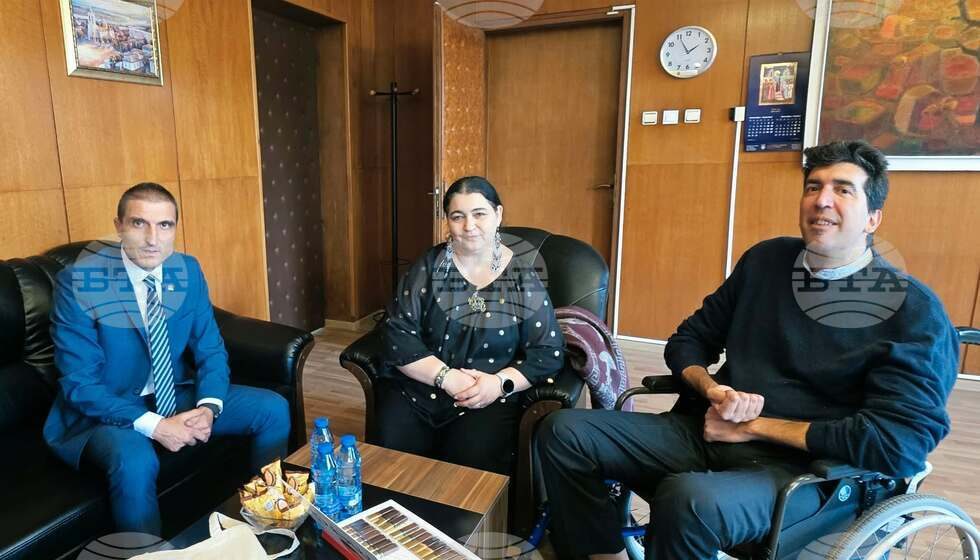
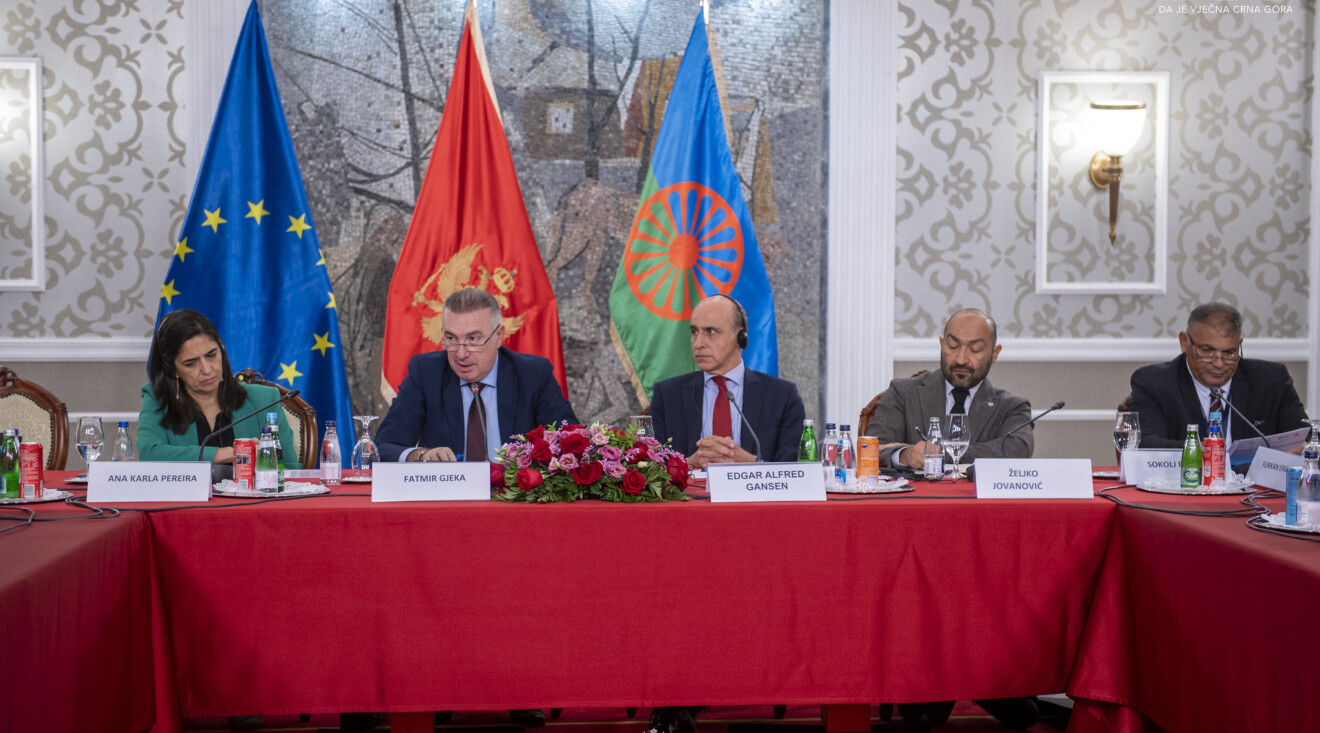
The Dobrich Municipality (Bulgaria) reported on progress in the integration of Roma communities. During the meeting, the results achieved from the implementation of the ROMACT approach were presented, as well as the main challenges faced by the municipality in the integration process.

Jakub Jarý

Published by:

Jakub Jarý

Jakub Jarý’s life journey proves that if a person really wants to, he can overcome obstacles that may seem insurmountable to others. He is now a medical doctor in Czechia.

Even though he comes from an excluded locality and grew up in a working-class family, he was set up from the beginning to want to fight for a better life. As he himself says: “No shortcuts will help and in the long run they will not bring anything good, I am convinced of that. If young people want to live in better conditions than the ones they grew up in, they can only achieve this through diligence and work.”

Education and Roma

Published by:

Education and Roma

On Thursday, March 25, over 30 young Roma from across Moldova, members of the Young Roma Network of the Republic of Moldova, presented the “Young Roma Manifesto”—a document outlining clear educational priorities. These include ensuring equal access to quality education, supporting students from vulnerable backgrounds, and continuously developing educational policies tailored to the needs of Roma communities. Thousands of teachers participated in public discussions on the concept of school subjects. During the event, held at the Ministry of Education and Research, young people highlighted the positive impact of specialized educational programs, especially scholarships for academic achievement, intended for Roma students in lyceums, vocational schools, and universities.

Switzerland and Bulgaria

Published by:

Switzerland and Bulgaria

The Ambassador of the Swiss Confederation H.E. Pierre Hagmann visited the office of the Amalipe Center and two of the institutions with which the Center works in close partnership – Sofia University “Kliment Ohridski” – the village of Kamen and the Municipality of Strazhitsa, to get acquainted with the organization’s activities. The conversations were about the Roma community and the challenges facing it, education, the contribution of the Swiss-Bulgarian Development Program, the role of NGOs and the support of the Swiss Embassy and the Ambassadorial Group on Roma Issues. The subsequent visit to the village of Kamen and the town of Strazhitsa continued and detailed these conversations.

Bulgarian Project

Published by:

Bulgarian Project

In the period 2023 – 2025, the Municipality of Lukovit implemented the project “Future for Children in the Municipality of Lukovit”, funded by the Human Resources Development Program 2021 -2027. As a result of the implementation of the projects, conclusions are drawn about the growing marginalization of certain places and neighbourhoods and the deepening challenges in terms of poverty and inequalities, including the lack of access to health, social, communal and other services for Roma groups. In the villages of Belentsi and Petrevene – a large percentage of Roma families with children, at risk of poverty, not speaking Bulgarian and for this reason – difficulties in the social and educational integration of children in kindergarten and school. In the village of Bezhanovo – a large number of families with eight to 10 children, in extreme poverty and at risk of marginalization. In the town of Lukovit – a compact Roma population in the “Iztok” district – according to expert observations, over five thousand people”, the report says.

  • Общинските съветници в Луковит одобриха всички предложения от дневния ред. In: Utro Ruse. 26.03.2026. https://utroruse.com/amp/?id=1226934

Novo Mesto Story

Published by:

Novo Mesto Story

For a change, a positive story about Roma in Novo Mesto, Slovenia. Đani, Nejc and Samo. Three names that could just be part of the everyday city hustle and bustle, are today something more. They are proof that it is possible – if you want it. All three are members of the Roma community and full-time employees of the Novo Mesto Municipal Corporation, where they take care of the city’s order every day. They empty bins, collect waste, maintain public spaces. The work is not always easy, but it has weight. And it has meaning. When you meet them in the field, you don’t just see workers – you see people who were given an opportunity and took it seriously.

Moldova and Roma

Published by:

Moldova and Roma

President of the Republic of Moldova Maia Sandu today participated in the conference “Roma and the Future of Work: A Social Rights Perspective” with Council of Europe Secretary General Alain Berset, where she discussed the challenges and achievements in integrating the Roma community.

The head of state noted that discrimination against Roma remains a widespread problem in many European countries, including the Republic of Moldova, as confirmed by the Council of Europe Secretary General’s 2025 report. In this context, the President emphasized the need for concrete and more targeted actions to integrate Roma into the labor market, as well as measures dedicated to youth and supporting entrepreneurship. The head of state also noted that the green and digital transitions must be inclusive, and all citizens, regardless of their origin, must be able to enjoy the full benefits of European integration.

Citizen Patrols

Published by:

Citizen Patrols

A Slovak project, “Citizen Patrols” which covered hundred and thirty-one cities and municipalities, 2,349 employees, 2,015 of whom are Roma, providing oversight in the municipalities and mediation, is being effectively shut down.

Bad.

Roma Inclusion

Published by:

Roma Inclusion

Students from the sixth to eighth grades of the “22. oktobar” Elementary School from Bački Monoštor, who attend the elective subject Romani language with elements of national culture, visited the Roma Inclusion Office in Novi Sad.

Accompanied by teacher Ivan Petrović, during this educational visit the students had the opportunity to learn firsthand about the work of this institution and the activities carried out to improve the position of the Roma community.

Social Inclusion in Czechia

Published by:

Social Inclusion in Czechia

The Ministry of Regional Development is preparing organizational changes that, according to information from the Seznam Zprávy server, could actually mean the end of the Social Inclusion Agency. Since 2008, it has been helping municipalities solve problems in socially excluded localities.

According to information from Seznam Zpráv, the current Department of Social Inclusion is to be merged with the Department of Housing Policy. In practice, this could mean a fundamental limitation of the activities of the Agency for Social Inclusion, which currently employs around a hundred employees and operates directly in the regions, where it helps municipalities prevent social exclusion.

Roma and Politics

Published by:

Roma and Politics

The Roma community in Serbia, which is estimated to number between 400,000 and 500,000 people, continues to face numerous challenges when it comes to political representation and real influence in public life. Although there are formal mechanisms for Roma political participation, many experts and activists believe that their political power is still limited.

In Serbia, Roma have certain institutional mechanisms for political action. One of the key ones is the National Council of the Roma National Minority, which represents the central institution of the Roma community in the areas of education, culture, information and official use of the language.

Well, those mechanisms have little influence, and can be called alibi excercises.

Slovakia and Roma

Published by:

Slovakia and Roma

There are approximately 450,000 Roma living in Slovakia, yet we often know little about their everyday experiences. Discussions about Roma communities are often full of stereotypes, emotions, and simplifications that obscure the complex reality of the life of the Roma minority. This new episode of the SAS Scientific Podcast, welcomed social psychologist Barbara Lášticová from the Institute of Social Communication Research of the SAS, v. v. i., and anthropologist Andrej Belák from the Institute of Ethnology and Social Anthropology of the SAS, v. v. i. In an interview with Peter Boháč, they talk about anti-Roma racism, the everyday experiences of Roma in Slovakia, and why the integration of Roma communities is so difficult.

Serbia and Roma

Published by:

Serbia and Roma

The 11th session of the Assembly of the National Council of the Roma National Minority in Belgrade, the results of the work in the previous year and plans for the coming period were discussed, aimed at strengthening the institutional role of the Council and improving the position of the Roma community.

Well, frankly, not much was done …

The Church and Roma

Published by:

The Church and Roma

The village of Lomnička in the Stará Ľubovňa district will probably make it into the news. The church works with the Roma community there to a significant extent. It achieves almost miraculous results.

Over 90 percent of Roma live in Lomnička, which is one of the highest proportions in Slovakia. A thousand children attend the local school. The two-shift operation here will not be eliminated anytime soon. Many residents of Lomnička live below the poverty line. The church often helps them. The local priest is also a teacher, a construction worker and has a tractor driving license. “When necessary, he will build a road. He also built a playground. He does everything for us,” says Lomnička resident Karol Mirga.

Roma Mayors

Published by:

Roma Mayors

On March 5, Roma mayors and representatives of third sector organizations from the Slovak Gemer region met in the village of Barca in the Rimavská Sobota district. The aim of the meeting was to renew the cooperation that had worked in the region in the past, and to create a common platform for solving current problems and supporting the further development of the region.

EU Help

Published by:

EU Help

A very critical report on the current office of the plenipotentiary for Roma communities and on how they use the rather large funds (ca. 200 Mio euros) received from the EU for the integration of Roma communities. It contrasts this current era with the work that was done by previous plenipotentiaries.

Italy: Integration

Published by:

Italy: Integration

The first co-planning session for regional interventions to improve the integration of Roma, Sinti, and Caminanti (RSC) communities in Puglia was held at the Puglia Regional President’s Office. The objective is to gain a deeper understanding of the nomadic and sedentary presence of RSC communities in Puglia, thus avoiding the risk of marginalization through measures that strengthen social integration policies. The meeting was attended by the regional councilor for Culture and Knowledge, Silvia Miglietta, and the Social Territorial Areas that responded to the expression of interest, which closed on February 13th. “This meeting,” the councilor said, “will be followed by others.

Ida Kelarova

Published by:

Ida Kelarova

At the end of last year, a new children’s choir was created in Ostrava, which arose from the efforts of singer and choirmaster Ida Kelarová to find new talents for her ensemble known as Čhavorenge (Romani for “Child”). The children who did not succeed in the audition wanted to continue singing together, and so, thanks to cooperation with local organizations Vzájemné soužití, Ostravská nota, Velká náruč and with Milan Bindatsch from the Ibsenova Elementary School, a new ensemble was born. Its creation brought with it an unexpected effect among the residents of excluded localities – a strong emancipatory and activating effect.

rroma.org
en_GBEN