Category Archives: News Eastern Europe

Kindergarten Enrolment

Published by:

Kindergarten Enrolment

In the Slovenian municipalities of Šentjernej, Škocjan, and Šmarješke Toplice, acceptance of Children in kindergartens is supposed to be easy and fast.

However, despite a large Roma population in Šentjernej, no Roma children are currently enrolled in local kindergartens, highlighting challenges in getting them to school.

The number of children with special needs is increasing, while overall birth rates are declining, affecting kindergarten enrollment numbers.

Serbian Roma Mufti

Published by:

Serbian Roma Mufti

The Islamic Community of Serbia has appointed Alija ef. Dermaku, an imam from Bujanovac, as the first mufti for the Roma community in Serbia and the diaspora.

Dermaku’s role will encompass overseeing Roma Muslims both in Serbia and abroad, reflecting his long-standing involvement with the community and understanding of their culture.

This appointment is significant as it marks a shift in representation for Roma Muslims within the Islamic Community of Serbia, highlighting the community’s presence in various regions, including northern Kosovo. This latter statement is far from anodine and is politically loaded. Northern Kosovo Roma – mostly Gurbeti – while predominantly moslem, are more related to their other Gurbeti brethren in further South than any others in Serbia proper.

Serbian Elections

Published by:

Serbian Elections

A meeting in Belgrade resulted in an agreement among four political organizations representing the Roma community to collaborate in the upcoming parliamentary elections. The goal is to ensure that the Roma community has authentic political representation in the Serbian Assembly after nearly two decades without it.

The president of the Union of Roma of Serbia emphasized the importance of offering the Roma citizens a choice of political options that genuinely understand their issues.

Let’s see what it brings… In several cases, Roma votes were bought on behalf of the ruling party…

Roma Grave

Published by:

Roma Grave

The family of Zlatici Balážová, known as Ťumy, has redesigned her extravagant grave in Prešov, Slovakia, returning to a red and white floral theme while adding golden angel statues.

The grave, made of polished pink marble, is a prominent feature in the cemetery, reflecting the family’s ongoing dedication to honoring her memory with annual decorations.

Zlatici was buried six years ago, and her husband organized a lavish funeral that included a horse-drawn carriage, showcasing their affinity for luxury and elaborate tributes.

Roma in Slovenia

Published by:

Roma in Slovenia

Melisa Gutmann and Sandi Horvat are members of the Slovenian Roma Academic Club (RAK), which was founded in 2008. Horvat joined it two years later and has been its president for the past few years, while Gutmann is the vice president, who has been working in the club for ten years. We bring you their stories, their rich experiences, observations and warnings about what the real problem is… Read the double interview, from which it is clear: “The problem is not the Roma, the problem is in the system, which has been repeating the same mistakes for decades.”

Šerutnipe – Šutka

Published by:

Šerutnipe – Šutka

For the first time, Roma mayors, councilors, presidents of councils and parliamentarians from different parts of Europe are coming together with Roma-led institutions, opening up one of the most important questions of the contemporary Roma political movement: what comes after political representation and how to turn the won mandate into real decision-making power and concrete changes in people’s lives.

This is taking place in the largest Roma settlement in Europe, the Šutka in Skopje, North Macedonia.

Exhibition

Published by:

Exhibition

If you happen to visit Poland in the upcoming months, “Weś gilaweł / The forest Is singing”, an exhibition of works by Małgorzata Mirga-Tas dedicated to the memory of the Romani genocide, has just opened in Zakopane and will be on display until 31 January.

EU Funds

Published by:

EU Funds

Vladimir Ledecký criticizes the allocation of EU funds for Roma projects, claiming they are wasted on ineffective projects instead of addressing real issues in Roma communities.

He highlights potential corruption and nepotism in government-funded initiatives, particularly involving the organization Lavuta, which is linked to the government plenipotentiary for Roma communities, Alexander Daško, who has arranged 749,000 euros for his wife.

The Ministry of Labour defends the projects as necessary and compliant with regulations, while Lavuta argues that their work is essential for improving the lives of families in poverty.

His voice carries weigth, as he is known for his exemplary work with the Roma community when as the mayor of Spišsky Hrov and during his work in the Prešov region.

Racism in School

Published by:

Racism in School

On the first day of school at Šmihel Primary School in Novo mesto, Slovenia, a Roma child was bullied by classmates who expressed their refusal to be in the same class as him, highlighting ongoing discrimination against Roma children in schools.

The mother of the bullied child emphasized that such discrimination starts early and worsens over time, with complaints about Roma children beginning in the first grade.

Local Roma councilor Bojan Tudja noted that incidents of discrimination are common and that schools often fail to address these issues, leading to a negative environment for Roma students.

School Supplies

Published by:

School Supplies

Nice, but a drop in a large Ocean…

101 Roma children from Berchișești received school supplies through a European project implemented by ACDC in partnership with local schools and the municipality.

The project includes warm meals and a program to support children’s education and personal development, with activities like homework help and creative arts.

Local organizations emphasize the importance of collaboration between schools and families to improve educational access and prevent school dropout.

School Segregation

Published by:

School Segregation

Approximately 250 Roma students attend the Vuk Karadžić Elementary School in Niš, highlighting the issue of educational segregation as nearly all students belong to the same ethnic community.

Despite various initiatives, the long-standing problem of educational segregation persists, with the school’s location near a Roma settlement contributing to the high percentage of Roma students.

The focus should be on ensuring desegregation and equal educational opportunities for all children, rather than simply relocating Roma students from the school.

Child Abduction?

Published by:

Child Abduction?

A strange story in Ukraine of a possible abduction by Roma of a two years old child. This sounds very much like one of the stereotypes attributed to Roma. It is also unclear from the article whether the child is or is not Rom…

Bad journalism and stereotypes.

Alina Șerban

Published by:

Alina Șerban

Alina Șerban, acclaimed for her role in ‘Housekeeping for Beginners’, returns to the Venice Film Festival as a director and screenwriter with her debut feature ‘I Matter’, premiering on September 8.

‘I Matter’, a co-production between Romania, Germany, and Belgium, is one of eight films selected for the Spotlight section at the festival, competing for the Luigi De Laurentiis Award for Best Debut and the Audience Award.

The film tells the story of Rebeca, a Roma teenager preparing to leave a care center, highlighting underrepresented narratives in cinema about the complexities of Roma experiences and adolescence.

RARE

Published by:

RARE

Young Roma from various countries are participating in the RARE Roma Youth Leadership Bootcamp in Divčibare, Serbia, aimed at developing leadership skills and community engagement among Roma youth.

The bootcamp features sessions like “Own Your Voice,” focusing on building self-confidence, confronting stereotypes, and preserving cultural identity.

The program is part of a larger EU initiative to improve educational opportunities for Roma students in the Western Balkans and Turkey, funded by the European Commission.

Roma in Serbia

Published by:

Roma in Serbia

Minister for Human and Minority Rights, Demo Beriša, visited Beočin to discuss challenges faced by the Roma community with local officials and community members.

Beriša emphasized the importance of open dialogue and collaboration to improve living conditions for the Roma minority.

The visit reflects the Ministry’s approach of engaging directly with citizens to understand their needs and work with local governments on solutions.

Gypsy Lore Society

Published by:

Gypsy Lore Society

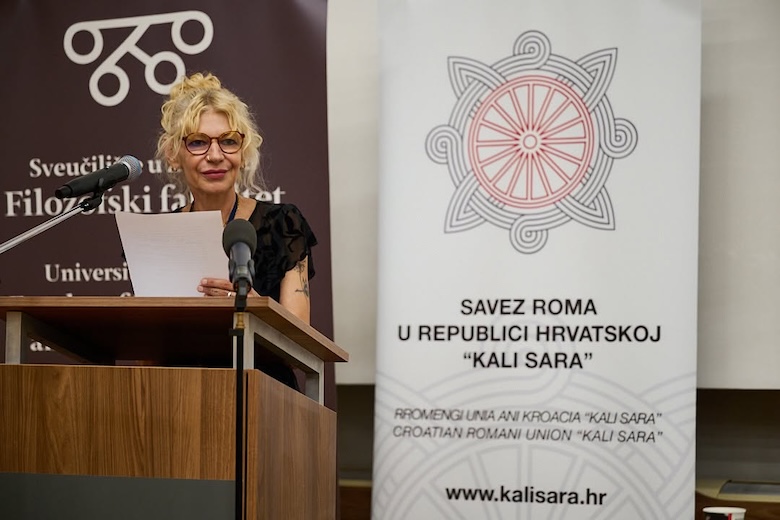
The 2026 Annual Meeting of the Gypsy Lore Society and Conference on Romani Studies took place in Zagreb, featuring Maja Grubišić discussing her research on Romani customary law in Croatia, supported by the Roma Association ‘KALI SARA’.

The research aims to document and explore the historical practices and institutions that have shaped Romani communities, emphasizing the need to view customary law as part of their cultural heritage rather than a justification for practices that may infringe on individual rights.

Grubišić highlighted the diversity of Romani customary law, which varies across communities and is influenced by historical, geographical, and social contexts, advocating for an interdisciplinary approach to better understand its complexities.

Romani Zour

Published by:

Romani Zour

The Romani Zour program, aimed at increasing employment among the Roma community in Kočevje, has seen limited success, with only three out of 18 participants securing jobs after six months.

According to the artcile, many Roma prefer to rely on social help rather than seek employment, as they often receive more financial support through these programs than they would earn from jobs. The program faces challenges, including a lack of interest from local employers and the need for better planning and support for participants, such as providing meals during work hours.

The issue is as usual racism and education …

Roma in Serbia

Published by:

Roma in Serbia

Nevenka Vasić from the Democratic Union of Roma (DUR) stated that Roma in Serbia should no longer be treated as political targets during elections with empty promises and cheap packages.

She emphasized the long-standing systemic economic and social neglect of the Roma community, calling for permanent jobs, quality education, and real equality instead of temporary promises.

According to the 2022 census, there are 131,936 declared Roma in Serbia, but estimates suggest the actual number could be between 400,000 to 500,000, highlighting the need for the community to be recognized beyond just social assistance.

Evaluation?

Published by:

Evaluation?

The Slovak government is launching a new phase of a program aimed at monitoring and evaluating public policies for the Roma population, particularly marginalized communities, to better address their needs.

The initiative, which follows a previous phase, emphasizes the importance of collecting and analyzing current data to assess the effectiveness of implemented measures and improve decision-making at various governmental levels.

A budget of over 5.68 million EUR has been allocated for this project, with funding from both the European Union and the Slovak state budget, aiming to enhance socio-economic integration and improve living conditions for marginalized Roma communities.

It is simpler to evaluate what has not really been done rather than doing things that matter.

Serbia – Challenges

Published by:

Serbia – Challenges

The article discusses the challenges faced by young Roma in Serbia, including education, discrimination, and the desire to emigrate for better opportunities.

Despite improvements in educational attainment, young Roma still face high unemployment and discrimination in the job market, leading many to consider leaving Serbia.

The article emphasizes the need for systemic change and support from both the state and the Roma community to ensure young Roma can thrive and contribute to their society.

rroma.org
en_GBEN